

In modern cosmetic dentistry, smile design is the multidisciplinary process of creating the most suitable aesthetic result for a person’s facial features, personality and biology. For patients from the US and the UK, smile design in Turkey has become one of the most attractive ways to combine world-class aesthetics with a realistic budget. Beyond appearance, your smile directly affects your wellbeing and confidence, and in 2026 biocompatible materials and precise digital planning make long-lasting results that combine beauty and function possible.
Aesthetic treatment, including smile design in Turkey, is shaped by many variables: the shape, colour and size of the teeth and the position of the gums. A successful smile design is based on your facial proportions and blends golden-ratio principles with the rules of modern dentistry. Wear, discolouration, asymmetry and uneven gum lines can all be corrected with personalised protocols. In this guide we explain how smile design in Turkey works, which materials are used, how prices compare with the US and UK and what to expect from your trip.
What Is Smile Design and How Is It Done?
Smile design is the analysis of the dynamic relationship between the teeth, gums, lips and overall facial anatomy to create the ideal aesthetic form. Rather than one treatment, smile design in Turkey combines procedures such as porcelain veneers, zirconia crowns, gum contouring (pink aesthetics), composite bonding and teeth whitening according to your needs. The aim is not only beautiful teeth but also healthy chewing and correct phonetics, so that you speak naturally.
Every case of smile design in Turkey starts with a multidisciplinary assessment. Before treatment, your medical history is taken and your jaw joint (TMJ) is examined. If there is a joint problem or bruxism (teeth grinding), it must be treated before any aesthetic restoration, because no cosmetic result lasts without a healthy foundation. Professional smile design demands a perfect balance of aesthetics, biology and mechanics.
Digital Planning Steps in Aesthetic Dentistry
Digital Smile Design (DSD) has become the backbone of smile design in Turkey and aesthetic restorations in 2026. Intraoral data is captured with optical scanners and combined with high-resolution photographs and facial scans. The dentist can then evaluate the static and dynamic relationship of your teeth with your face, when smiling and speaking, in a 3D simulation.
In the first step, scans and studio-quality portraits are uploaded to specialised software. The midline, the length of the incisal edges, the gum levels (zenith points) and the occlusal plane are calculated to the millimetre. Our dentists interpret this digital data with their clinical experience to create the form that best matches your facial symmetry, which is at the heart of successful smile design in Turkey.
When the digital plan for your smile design in Turkey is complete, a temporary “mock-up” is made and placed over your teeth without any preparation. You can see and feel the final result on your own face before treatment starts. Once you approve it, restorations such as porcelain veneers or E-max crowns are produced with CAD/CAM technology. Digital planning minimises errors and maximises communication between you and your dentist, which is especially valuable when you travel to Istanbul for a limited number of days.
Hollywood Smile vs. a Personalised Design
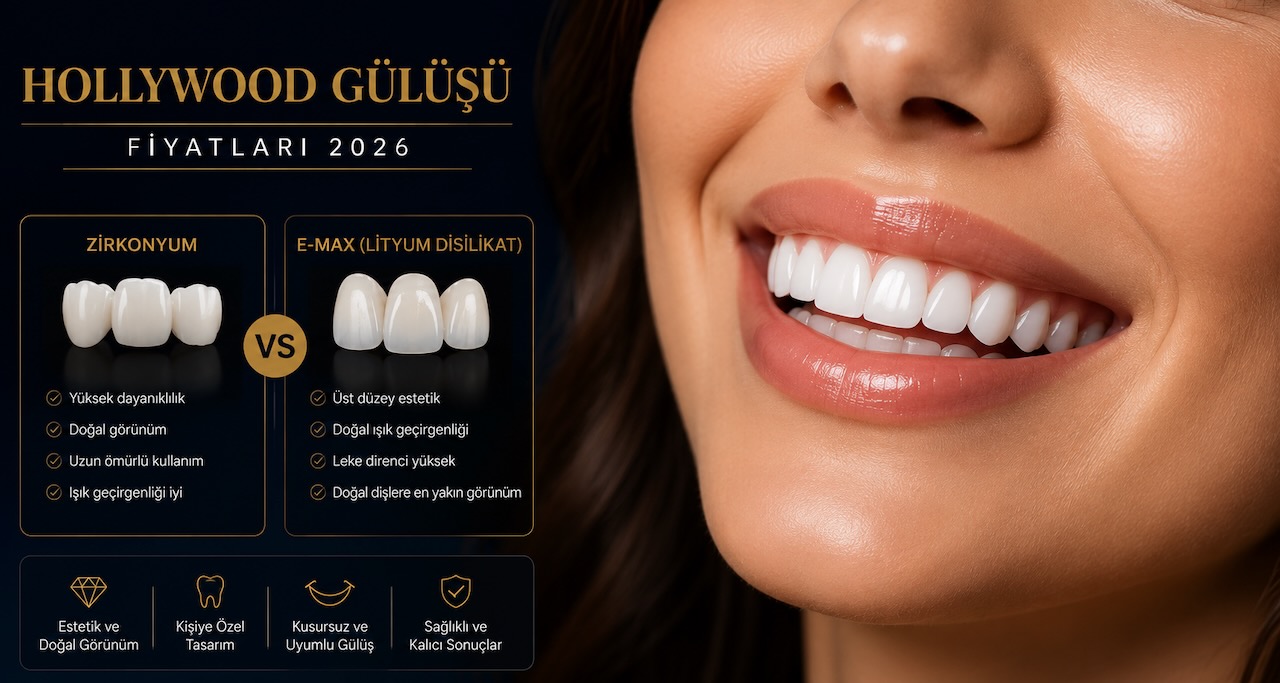
The term Hollywood smile usually describes ultra-white, perfectly straight, wide and symmetrical teeth. It is eye-catching, but it does not suit every face or personality, and when all front teeth are made in one standard shape and maximum whiteness, the result can look artificial. You can read more about this approach in our guide to Hollywood smile prices in Turkey.
A personalised approach to smile design in Turkey focuses entirely on your characteristics: gender, age, skin tone, lip thickness and even personality influence the shape of the teeth. Rounder teeth tend to look more feminine, while sharper, squarer forms appear more masculine and dynamic. In a natural design, the teeth are not one flat colour; like natural enamel, the gum-side areas are slightly warmer and the edges are translucent.
The goal is to highlight the smile, not the teeth. When restorations are done well, other people do not notice that you had treatment; they simply see a healthy, rested and attractive expression. That is why ethical dentists who follow Turkish Dental Association standards create a unique design for every patient within their anatomical reality, which is the philosophy we follow for smile design in Turkey.
What Affects the Cost of Smile Design in Turkey in 2026?
Cost is one of the first questions patients ask about smile design in Turkey, but cosmetic dentistry is not an off-the-shelf product with a fixed price. Every person’s anatomy, dental history and expectations are unique, so treatment plans are fully individual. Clinic infrastructure costs, the advanced restorative materials used and your current gum health are the main factors. Because cosmetic crowns should never be placed on an unhealthy foundation, the procedures included in smile design in Turkey vary greatly from patient to patient.
After a radiographic and clinical examination, your dentist determines which teeth need restoration. Some patients only need small touches on the upper 6 front teeth, while others need a full rehabilitation of 16 to 20 teeth, including gum contouring. The table below compares the 2026 TDB guideline fees with our clinic prices, converted from Turkish lira and rounded up.
| Smile design item | TDB 2026 guideline (approx.) | Akdiş Clinic price |
| Zirconia crown (per tooth) | $260 – $290 / £200 – £220 | $170 / £130 |
| Composite veneer (per tooth) | $210 – $250 / £160 – £190 | $170 / £130 |
| Aesthetic (tooth-coloured) filling | $120 – $140 / £90 – £110 | $100 / £70 |
| Teeth whitening + scaling | $250 – $310 / £190 – £240 | $210 / £160 |
| Gingivectomy (pink aesthetics) | $90 – $120 / £70 – £90 | $70 / £50 |
| Scaling (tartar removal) | $80 – $100 / £60 – £70 | $70 / £50 |
Important: the figures above are for information only. The total cost of smile design in Turkey depends on the number of teeth treated and your oral health, and is finalised after examination. For current prices and appointments, contact our dentists through the contact page.
How Does Smile Design in Turkey Compare With the US and UK?
In the United States, a full smile makeover with 16 to 20 porcelain veneers or crowns often costs $20,000 to $40,000 or more. In the UK, private clinics usually charge £500 to £1,000 or more per veneer, so a complete makeover can easily reach £10,000 to £20,000, and cosmetic treatment is not available on the NHS. With smile design in Turkey, a 16-tooth zirconia makeover starts at around $2,650 (£2,000), which is why so many patients combine treatment with a week in Istanbul.
Affordable smile design in Turkey should never mean low standards. The best value comes from a clinic that uses certified materials, a digital workflow and a mock-up, and that is honest about how many teeth really need treatment.
How the TDB Minimum Fee Schedule Affects Prices
In Turkey, the most important reference for dental pricing is the minimum fee schedule published every year by the Turkish Dental Association (TDB). It sets a floor for treatments to prevent unfair competition and to protect a basic level of quality, based on the dentist’s labour, treatment time, clinic costs and minimum material quality.
In healthcare, reliability and quality matter more than price, and smile design in Turkey is no exception. “Package deals” offered below the TDB tariff or at suspiciously low prices may indicate poor materials, weak infection control or unlicensed lab work. A good smile design is expected to withstand saliva, acids and chewing forces for many years, so when you compare smile design in Turkey, compliance with official standards and the dentist’s professional responsibility should come first.
Materials Used: Zirconia, E-max, Composite and Monolithic Zirconia
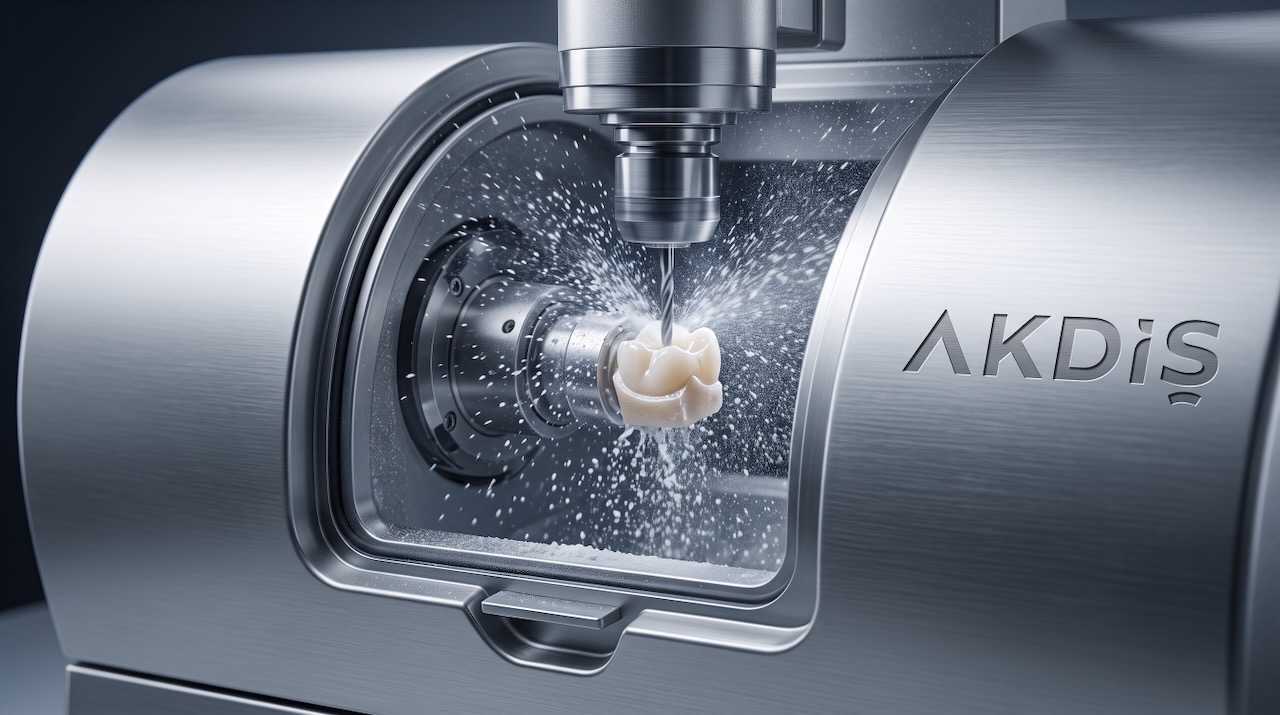
The restorative material is perhaps the most decisive cost factor. Each material has different biomechanical properties, translucency and lab processes. These four are the most common in smile design in Turkey:
- Zirconia crowns: metal-free, extremely strong under chewing forces and tissue-friendly. Preferred for back teeth and patients with bruxism, and they never cause dark gum lines or allergic reactions.
- E-max (lithium disilicate): for front teeth where aesthetic expectations are highest, as its translucency is almost identical to natural enamel. It is more brittle than zirconia and not used for long bridges, and it usually costs slightly more.
- Monolithic zirconia: milled from a single block without a porcelain layer, so the risk of chipping is close to zero. New translucent blocks give excellent results even on front teeth.
- Composite bonding: applied directly by the dentist without a lab stage, so it is more economical. Gaps and chips are corrected without drilling, but it needs periodic polishing. See our guide to composite bonding prices in Turkey.
Dentist Expertise and Clinic Technology
Changing the colour or shape of a tooth may look like a technical task, but harmonising it with jaw movements, protecting gum health and preserving speech requires advanced clinical expertise. Good smile design in Turkey is not about selling materials; the dentist’s experience, aesthetic vision and biomechanical knowledge determine success. An experienced dentist balances your bite to the millimetre so that you do not develop jaw pain and your restorations do not fracture.
Technology also affects the quality and cost of smile design in Turkey. At Akdiş Clinic we use intraoral optical scanners and high-capacity CAD/CAM systems. Digital scanners eliminate the gag reflex and shrinkage errors of traditional impression materials and allow restorations to fit the prepared tooth at a microscopic level. This technology requires significant investment, but it extends the life of restorations and maximises comfort, making it the most rational choice in the long run.
Core Procedures in Smile Design
A comprehensive plan combines several dental disciplines, prosthetic, periodontal and restorative, and there is no one-size-fits-all solution. Here are the procedures most often used in smile design in Turkey.
Porcelain Laminate Veneers
Porcelain veneers are among the most conservative and refined aesthetic treatments. They are contact-lens-thin ceramic shells, about 0.3 to 0.7 mm, bonded only to the front surface of the teeth. Unlike crowns, only a minimal amount of enamel is reduced, and in suitable cases “prepless” veneers can be placed without touching the enamel at all, preserving the tooth’s biology and nerve.
Within smile design in Turkey, veneers are used to close gaps, mask permanent discolouration, correct mild crowding and restore chipped or worn teeth. After a digital impression, they are produced with CAD/CAM or by skilled ceramists and bonded chemically to the enamel with resin cements. The bond is so strong that a veneer almost never comes off in one piece. Their smooth surface resists staining from coffee, tea and smoking and keeps its shine for years.
Aesthetic Zirconia Crowns
The biggest drawback of old metal-ceramic crowns was the purple shadow at the gumline and a flat, artificial look. Zirconia solved this problem and has become an essential part of smile design in Turkey thanks to its biocompatibility and strength.
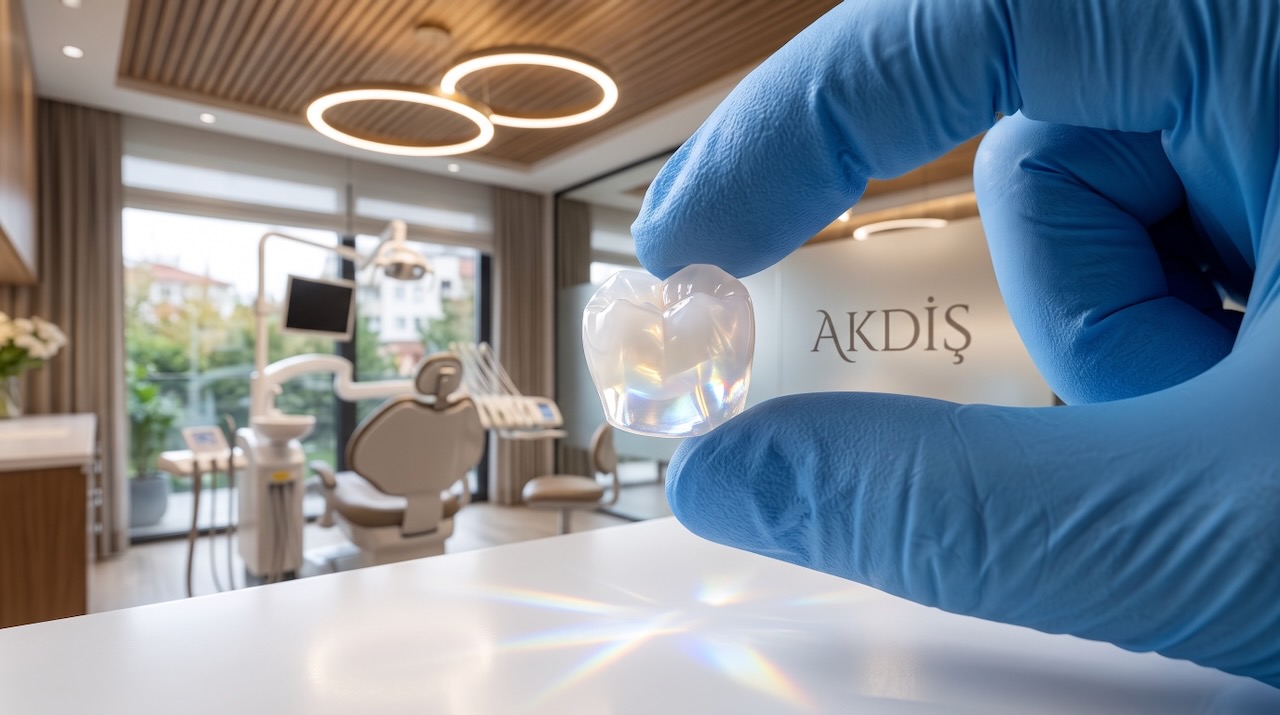
In smile design in Turkey, zirconia is used with confidence for teeth with major tissue loss, large fillings and crowns on implants. It adapts perfectly to the gums and is the safest option for patients with metal allergies. Highly translucent monolithic zirconia now produces very natural results even on front teeth, and because its refractive index is close to enamel, it reflects light like your own teeth under sunlight or spotlights.
Pink Aesthetics (Gum Contouring and Gingivectomy)
Just as a picture looks better in a perfect frame, the gums are the frame of your teeth. However perfect your teeth are, asymmetric, inflamed or excessive gums spoil the overall look. Gum contouring reshapes the gum line according to aesthetic and biological rules.
A common problem is the “gummy smile”, where more than 2 to 3 mm of gum shows when you smile and the teeth look short. With a gingivectomy performed with electrocautery or a dental laser under local anaesthesia, excess gum tissue is removed painlessly and the teeth appear longer. Bleeding is controlled in the same session, so you can return to your daily routine immediately. Creating healthy, symmetrical gum levels before placing zirconia or E-max crowns is the golden rule of smile design in Turkey.
Composite Bonding and Teeth Whitening
For patients who want a faster, more economical and completely non-invasive approach, composite bonding is an excellent option. Gaps, minor crowding, chips and cracks are corrected in one session of about 1 to 2 hours, as the dentist sculpts the tooth directly and polishes it to a natural shine.
If you are only unhappy with the colour of your teeth, whitening may be enough. In-office bleaching under supervision or at-home bleaching with custom trays removes stains through a controlled oxidation reaction. Performed correctly with professional gels, whitening is safe and creates a bright base for your new smile. Learn more on our teeth whitening page.
Smile Design as Anti-Ageing Dentistry
While anti-ageing treatments in dermatology receive a lot of attention, the role of dentistry in facial aesthetics is often overlooked. Yet smile design is one of the most effective and natural ways to reverse signs of ageing in the lower third of the face. Over the years, chewing, speaking and acidic foods shorten the teeth and thin the enamel, so the yellow dentin shows through and the teeth look darker and duller.
Shorter teeth also reduce the vertical height of the lower face. By restoring worn teeth to their ideal length and volume with porcelain or full-ceramic crowns, smile design in Turkey can restore lower-face height and remove the tired, sunken look for a younger, more dynamic appearance. Veneers on the upper front teeth also support the upper lip from within, making the lips look fuller without fillers.
Jaw Joint Health (TMJ) and Functional Design
A common mistake is to treat smile design as a simple cosmetic change of colour and shape. No aesthetic treatment can be lasting and pain-free without biomechanical harmony. If the new teeth do not match your natural chewing pattern and contacts are unevenly distributed, this can quickly lead to jaw pain, clicking and muscle spasms, and it shortens the life of even the best restorations.
That is why assessing and protecting joint health is step zero of reliable smile design in Turkey. Your stable jaw position is recorded with digital scanners, and zirconia or E-max restorations are virtually tested for function in CAD/CAM software before production.
Aesthetic Solutions for Patients With Bruxism
Bruxism, the involuntary clenching or grinding of teeth during sleep, is one of the biggest threats to both aesthetics and joint health. For these high-risk cases, monolithic zirconia with high fracture resistance is an excellent medical solution, because there is no separate porcelain layer that can chip. After treatment, a custom hard night guard protects your new smile from abnormal night-time forces.
Frequently Asked Questions About Smile Design in Turkey
How much does smile design cost in Turkey in 2026?
It depends on the material, the number of teeth and any additional treatment. Based on TDB guidelines, zirconia crowns cost about $260 to $290 (£200 to £220) per tooth, while our clinic price is about $170 (£130) per tooth. An exact plan requires a 3D scan and X-rays.
How much does a full 16 to 20 tooth smile makeover cost?
A full makeover usually covers 8 to 10 upper and 8 to 10 lower teeth. With zirconia at about $170 (£130) per tooth, a 16-tooth treatment starts at around $2,650 (£2,000). E-max veneers, root canal treatment or gum surgery change the total. We prefer a personalised plan rather than a fixed “package”.
Should I choose zirconia or E-max veneers?
Your dentist decides based on tissue loss, expectations and chewing forces. Zirconia is extremely strong and ideal for back teeth, implants and bruxism. E-max offers the highest aesthetics for front teeth with minimal tissue loss. Both are among the most reliable materials in modern dentistry.
Is smile design permanent?
No dental material can be guaranteed forever, but a well-made smile design lasts 10 to 15 years on average and often more than 20 years with good care. Porcelain and zirconia do not decay or stain, but gum recession, decay of the underlying tooth or trauma may eventually require renewal. Check-ups every six months are the key to longevity.
How long does smile design take in Istanbul?
Without surgery, standard smile design in Turkey is completed in about 7 to 10 days over 3 to 4 appointments: digital impression, framework try-in, aesthetic try-in and final placement. Temporary teeth are fitted on the day of preparation, so you look and function normally throughout your stay.
Is smile design painful?
No. Modern local anaesthetics ensure you feel no pain during preparation or gum contouring. Mild sensitivity afterwards is normal and easily controlled with standard painkillers.
Is smile design covered by the NHS or insurance?
No. Purely cosmetic treatments such as veneers, aesthetic crowns and whitening are not available on the NHS and are rarely covered by US dental insurance, which is one reason patients consider smile design in Turkey.
How much does Digital Smile Design (DSD) cost?
The analysis, simulation and mock-up usually cost about $50 to $90 (£40 to £70). At Akdiş Clinic, this fee is deducted from your treatment cost if you go ahead with zirconia or E-max restorations.
Conclusion: Your Trusted Guide to a New Smile
Your smile is your strongest signature. Genetics, trauma or years of wear no longer have to be permanent. When the precision of 3D scanners, the strength of zirconia and the natural translucency of E-max come together, reaching your ideal smile is comfortable and safe. A comprehensive plan starts with your facial anatomy, gum health and bite, so that your new smile does not only look good in photos but also works when you bite an apple or laugh out loud.
To get full value for your health and your money, entrust smile design in Turkey to a clinic with transparent pricing, strong technology and fully qualified dentists. Visit our smile design page or contact us through our contact page for a free pre-assessment and your personalised 2026 treatment plan.
One thought on “Smile Design in Turkey 2026: How It Works, the Best Materials (Zirconia vs E-max) and a Proven Price Guide”