

What Is Dental Filling?
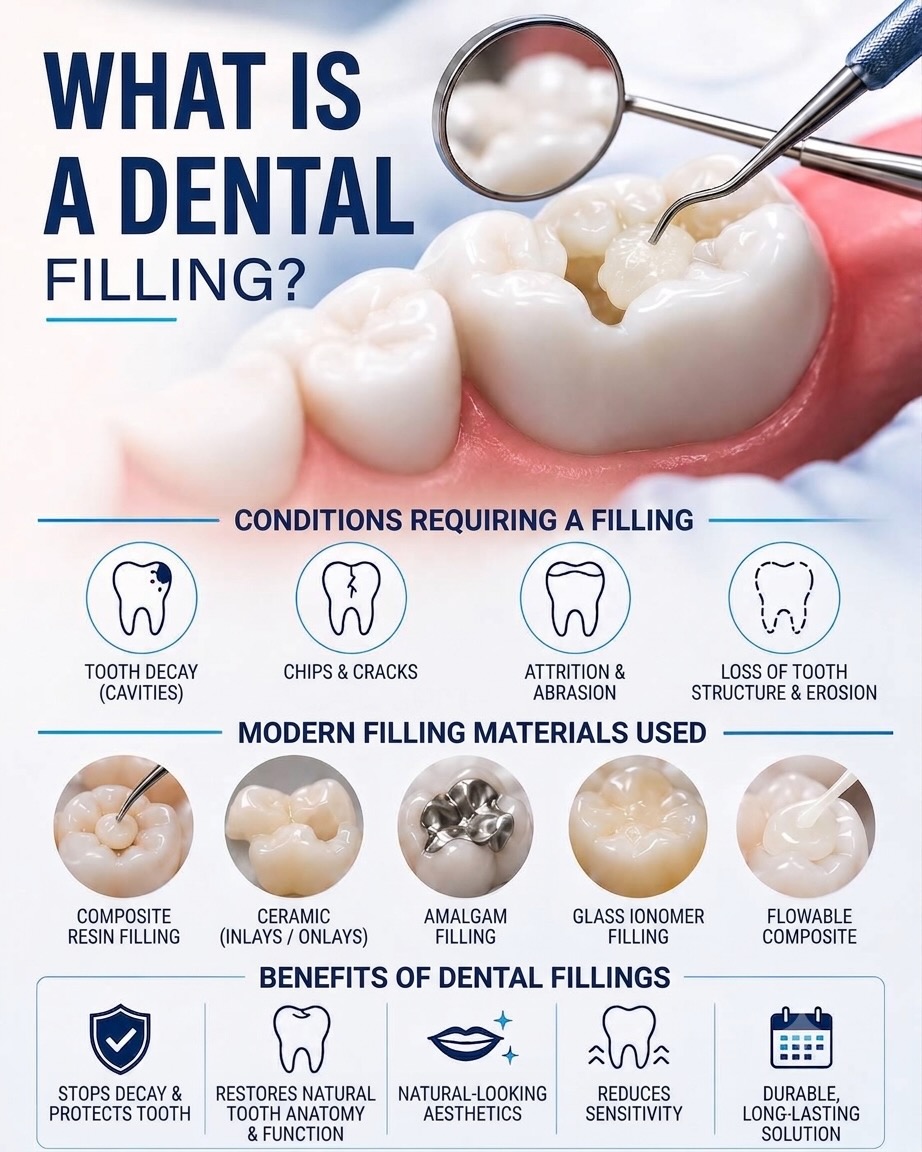
Dental filling, which is one of the most basic and most frequently applied procedures of modern restorative dentistry, is the process of biomechanically and aesthetically restoring the decomposed, broken or worn tooth structure that has been lost due to various reasons. This treatment, which aims to restore the anatomical form of the tooth, the chewing function and the biological integrity of the dental arch, prevents the progression of pathological processes and prevents tooth loss. In the event that tooth hard tissues (mine and dentin) are destroyed as a result of microbial dental plaque-induced acid demineralization, the infected tissues must be completely cleaned and the resulting cavity should be filled with biocompatible restorative materials. This situation in the medical literature Dental Restoration and is based on bio-mimetic principles.
Our clinic AK Dental Clinic In all the restorative treatments we carry out, new generation materials are used that imitate the natural histological structure of the tooth, have a high resistance to chewing forces, and provide a perfect biological harmony with the surrounding tissues. Dental filling is not only the process of closing the gaps, but also the art of maintaining the vitality (pulp tissue) of the tooth, promoting periodontal health and reestablishing the ideal occlusion. Today, thanks to the developments in digital dentistry and adhesive (binding) technologies, maximum-life restorations can be made by removing the minimum amount of substance from the dental tissue (minimally invasive approach).
In which situations is dental filling necessary?
Situations that need dental filling treatment often occur as a result of pathological or mechanical processes that threaten the structural integrity of the tooth. The most common indication is microbial origin tooth decay (Dental Caries), although the main clinical conditions that require filling applications in dentistry are:
- Active dental caries: In cases of demineralization and cavity formation caused by bacterial acids, which involve the enamel and dentin layer, dental filling is necessary to prevent the progression of infection.
- Dental traumas and fractures: Fractures, cracks and microscopic structural losses that occur in the tooth crown as a result of impact, fall or chewing of hard foods.
- Wears (attrision, abrasion, erosion and abfraction): Teeth clenching (bruxism), improper tooth brushing techniques, excessive consumption of acidic foods, or loss of enamel layer due to imbalances in functional load distribution.
- Renewal of old and defective fillings: Replacement of fillings that develop microleakage over time, have impaired edge compatibility, broken or secondary (repetitive) caries.
- Aesthetic defects and diastemas: Aesthetic filling and bonding applications in order to remove the existing structural deformities in the anterior group teeth and to close the spaces between the teeth (diastema).
- Restorations after root canal treatment: Permanent filling in order to increase the resistance of the pulp tissue removed against fracture and to provide a sealed upper restoration.
What are the symptoms that require dental filling?
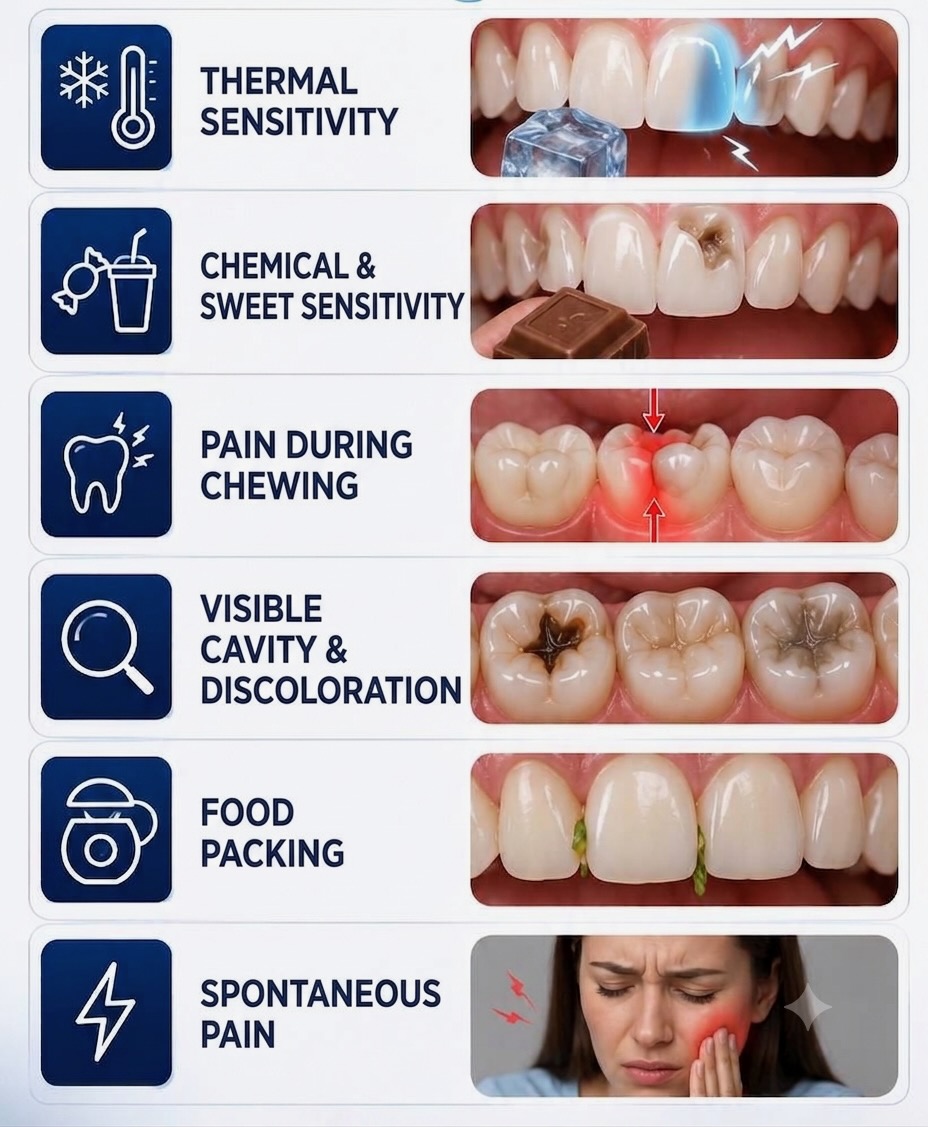
The damage that occurs in the tooth tissues may be completely symptom-free (painless) at the initial stage. However, as the lesion progresses to the dentin layer and approaches the pulp tissue, a number of clinical manifestations appear. The most common symptoms that our patients may need a dental filling are:
- Thermal sensitivity: A sharp tooth sensitivity that lasts for a few seconds, especially when cold or hot foods and drinks are consumed.
- Chemical and sweet sensitivity: When chocolate, sugary foods or acidic drinks are consumed, a sudden feeling of tingling or pain in the tooth.
- Pain during chewing: A localized pain or stinging sensation when the corresponding tooth is pressed or functionally loaded during the function.
- Visible cavity or discoloration: Black, brown or gray colored spots, pits and broken areas, which are noticed on the surface of the tooth when viewed in the mirror.
- Food compression: Due to the hidden cavities in the interfaces of the teeth (proximal areas), the constant compression of the food residues in the same area and the separation or rupture of the thread during the use of dental floss.
- Spontaneous pain: Pain that begins in a throbbing manner, especially at night, and which is difficult to respond to painkillers (this condition is usually very deep and deeply bruised, and root canal treatment shows that you are on the border).
Modern dental filling methods and supplies
Restorative dentistry is progressing directly with material science. Today, different dental filling methods and materials are preferred according to biomechanical requirements, aesthetic expectations and the position of the tooth in the mouth. As AK Dental Clinic, we choose the most ideal material according to the specific clinical condition of each patient.
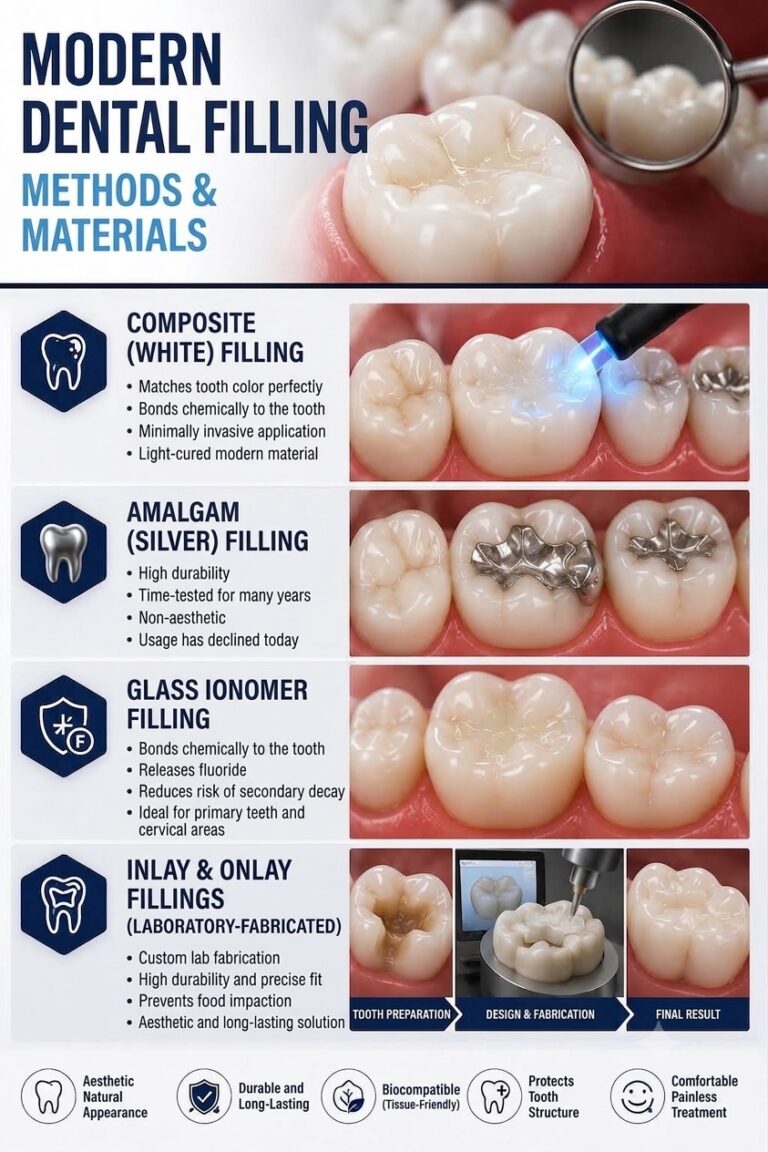
Composite (White) Filler
Composite resins are the most frequently used aesthetic restorative materials in modern dentistry. Consisting of an organic polymer matrix (usually bi-gma) and inorganic fillers (silica, glass, quartz), these materials have a wide color scale that can fully adapt to the tooth color.. Composite Filler Its materials have the property of chemically attaching (adhesion) to the tooth. In this way, as in amalgam fillings, there is no need to remove extra healthy tissue from the tooth in order to provide mechanical retention (minimally invasive approach).
These light-hardening (photopolymerized) materials are placed in the incremental cavity and polymerized with a special LED light source. This delicate technique, which our clinicians apply to minimize the risk of polymerization shrinkage, maximizes the micro-mechanical connection of the filling to the tooth. Composite fillings are safely applied both in aesthetic restorations in the front teeth and in restorations under the chewing load of the posterior teeth.
Amalgam (Silver) Filling and Today’s Place
Used in dentistry for nearly 150 years amalgam filling, is a metallic restoration material obtained by mixing silver, tin, copper and mercury metals. Its greatest advantages to chewing forces, ease of application and maintaining mechanical retention even in humid environments are their greatest advantages. However, in today’s modern clinical practice, its use has decreased considerably due to its lack of aesthetics, its inability to chemically bind to the dental tissue, and the ongoing toxicity discussions about mercury content (although the amount of free mercury remains stable after the filling has hardened).
For new treatments in our clinic, we prefer almost completely aesthetic and biocompatible composite or porcelain fillings instead of amalgam fillings. We do not recommend removing existing, unbroken and healthy amalgam fillings with only mercury concerns; However, if there is an edge leak or a functional break, in accordance with the SMART (Safe Amalgam Removal Technique) protocols, they can be safely removed and replaced with special protective barriers and high-priming surgical aspirators. we apply.
Glass ionomer filler
Glass ionomer cements (CIS) are special materials formed by the reaction of polyalkenoic acid and fluorocarbonate glass powder. The most important feature of these materials is that they can be directly chemically attached to the tooth structure and constantly **fluoride to the surrounding tissues**. Thanks to the release of fluoride, the risk of re-rooting at the edges of the filler (secondary caries) is dramatically reduced. In this context Glass ionomer fillerIn patients with very high caries activity, it is preferred in subgingival (under the gums) lesions where saliva isolation is not fully achieved, and especially in milk teeth treatments. However, since their mechanical resistance and wear strength are lower than composite resins, they are limited to their use as a stand-alone restoration on large surfaces of posterior teeth exposed to high chewing pressure.
Inlay and Onlay Fills (Laboratory Fillers)
Inlay and onlay restorations offer an excellent intermediate solution in cases where the loss of substance is too large to be restored with a classic composite filling, but the tooth does not require a crown (coating) to be completely reduced. This method is computer-aided design and production (CAD/CAM) technologies or personalized fillings from porcelain or reinforced composite material in a traditional laboratory environment.. Inlay and Onlay Fills, has a much higher wear resistance and excellent edge harmony than conventional fillings.
These restorations, which are called inlays or onlays according to whether the tooth covers the tubercle (cheat peaks) structure, perfectly imitates the proximal contact points between the teeth, as they are prepared in the laboratory in 100% compatible with the patient’s intraoral anatomy. Thus, the problem of food compression is completely eliminated. Aesthetically, they exhibit excellent optical permeability and harmony with their tooth color.
How is dental filling done? (Clinical Implementation Stages)
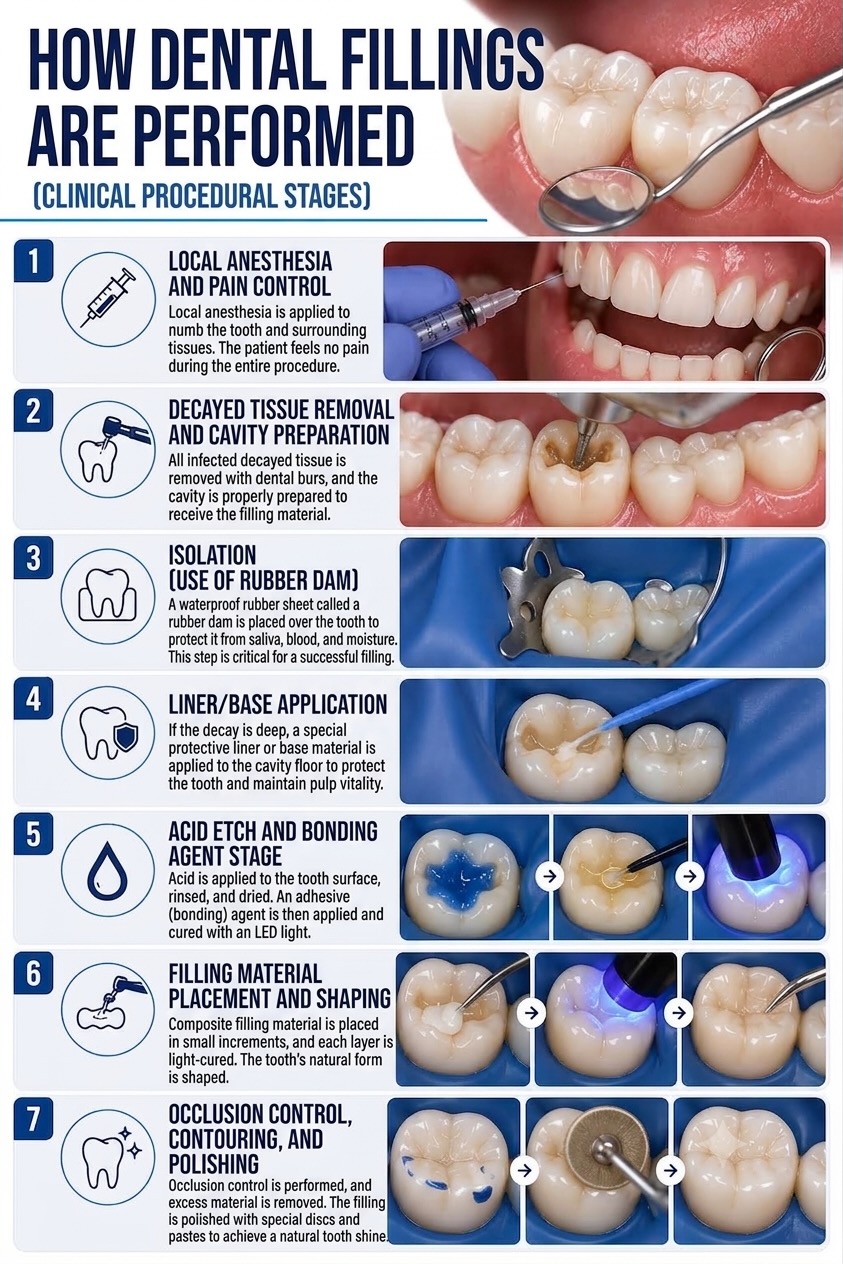
In AK Dental Clinic, the dental filling procedure is carried out step by step, adhering to international sterilization and clinical success standards. A successful filling process consists of the following stages:
- Local anesthesia and pain control: Local anesthesia is applied in order to deep anesthetize the tooth and surrounding tissues to be treated. In this way, the patient does not feel any pain or discomfort during the procedure. Anesthesia may not be needed in very superficial, enamel-level bruises.
- Cleaning of caries and cavity preparation: Using high and low-speed dental burs (or laser-assisted systems in selected cases), all infected dentin and enamel tissues with infected microorganisms are completely cleaned. The boundaries of the cavity are shaped by biomimetic rules according to the mechanical properties of the filling material to be selected.
- Isolation (Using Rubber Dam): The most critical factor in the success of the filling material is to keep the processing area completely away from saliva, blood and breath moisture. For this purpose, a waterproof rubber cover called “Rubber Dam” is attached to the tooth. Isolation allows the adhesive bonds to hold on to the tooth with maximum strength.
- Base (Liner/Base) Application: In cases where the decay is very deep and approaches the pulp chamber (the tooth nerve center), the protective protective base with calcium hydroxide or mineral trioxide aggregate (MTA) to protect the tooth from thermal stimuli and maintain the pulp viability (Lineer/Kuafage) placed.
- Acid and adhesive (bonding) stage: Orthophosphoric acid is applied to the surface of the tooth for a certain period of time in order to open micro-pores, washed and dried. Then, an adhesive (bonding) agent, which will chemically bind the filler to the tooth, is applied and polymerized with LED light.
- Placement and shaping of the filler material: The selected composite resin material is placed in the cavity in 2 mm layers to prevent polymerization shrinkage and each layer is light hardened. The chewing form is imitated by processing the natural anatomical tubercles and grooves (fissures) of the tooth.
- Occlusion control, leveling and polishing (polishing): After the filling is finished, the patient’s chewing movements are checked with the help of articulation papers. Heights and surpluses are taken, if any. In the final stage, the polishing process is completed using special discs, tires and polishing pastes to prevent plaque accumulation and achieve natural tooth shine.
dental filling prices
In dental filling treatments, the costs vary according to the type of restoration to be applied, the size and the quality of the material used. A precise cost analysis and treatment planning becomes clear only after the clinical and radiological examination.
Dental filling price table in our clinic
In the table below, the starting prices and contents of the current restorative treatment services implemented within the AK Dental Clinic are listed. Prices are based on Turkish Lira (TRY).
| Treatment Name | Description / Indication | Price (start) | IMPORTANT NOTES |
|---|---|---|---|
| Single Surface Composite Filler | Small bruises holding only one surface | 1,800 TL | It becomes clear after examination and X-ray. |
| Multi-surface composite filling | Wide bruises spreading to 2 or more surfaces | 2,500 TL | Interface cleaning and matrix use are included. |
| Aesthetic Bonding Application | Anterior tooth fractures, spacing (diastema) | 3.500 TL | Personalized aesthetic stratification is made. |
| Inlay/Onlay Fill (Porcelain) | Ultra-durable restoration with laboratory production | 8.500 TL | Measurement and CAD/CAM production processes are included (2 sessions). |
| milk tooth filling | Milk tooth restorations in pediatric patients | 1,500 TL | Fluoride-release biocompatible material is used. |
| Kuafage / Pedestal (Linelin) Application | Pulp protective base barrier in deep caries | 600 TL | It is applied under the filling to protect tooth vitality. |
| Temporary filling application | Canal treatment between sessions or follow-up processes | 700 TL | It is a filling that is planned to stay in the mouth for a certain period of time. |
Frequently Asked Questions (FAQ)
Standard composite, amalgam or glass ionomer dental filling treatments performed directly in the mouth are usually completed in a single session**. In terms of clinical time management, the filling of more than one tooth in the same region under the same local anesthesia can be safely done in a single appointment. However, porcelain Inlay and Onlay fillings, which require laboratory production, require **two sessions** due to the measurement and production stages.
The duration of a tooth filling; Although it varies depending on the depth of the caries, the position of the tooth in the mouth (front or posterior group), the number of surfaces to be restored and the patient’s compliance, it takes an average of **30 to 45 minutes per tooth. In deep caries, hairdressing (liner) applications or isolation processes may extend this period to some extent.
The lifespan of the restoration, its biological success and patient satisfaction directly depend on the choice of the correct filling material. The mechanical stress and aesthetic requirement that each tooth is exposed to is different. For example, in an anterior incisor, the chewing force is low, but the aesthetic expectation is maximum; In this case, nano-composites with high light transmittance and polishability should be selected. If the molars in the posterior region q = f/a In accordance with its formula, micro-hybrid composites or Inlay/onlay porcelain structures with maximum bending and compressive resistance should be preferred, since vertical chewing pressure (F) on a small surface is very high. Choosing the wrong material may cause the filling to break in a short time, wear out or cause tooth loss by creating cracks in the tooth.
It is quite natural to observe differences on the basis of clinical filling in dental filling prices throughout Turkey and throughout Istanbul. The main reasons for this situation are:
- The size of the bruise and the number of surfaces: The treatment of a caries on the upper (oclusal) surface of the tooth and a large caries that covers both the upper and lateral surfaces (mod – mesio-occiso-distal) has different costs in terms of the amount of material used and the clinical time spent.
- The quality and origin of the material used: The raw material costs of highly polished nano-composites and lower segmented filling materials of American, German or Japanese origin, with minimal polymerization shrinkage.
- Physician’s expertise and experience: The clinical experience, academic competence and case success of the physician who administers the treatment in the field of restorative dentistry affect the price policy.
- Clinical equipment and technology: The use of rubber dam in isolation, the use of advanced LED polymerization devices, dental lup or microscopes that provide size directly increases clinical success and is reflected in the cost.
In very cheap fillings, materials with high polymerization shrinkage are often used. This situation leads to the formation of invisible microscopic spaces (microleakage) between the filling and tooth tissue. Bacteria leaking from these leaks cause **secondary bruises** (repetitive caries) to form under the filling. Moreover, since these caries are not noticed from the outside, they move directly to the nerves of the tooth and cause severe pain in the tooth, abscess, as a result, canal treatment or tooth extraction leads to necessity. In addition, poor quality fillings cannot withstand chewing forces and may break or fall in a short time. As Akdiş Clinic, our recommendation is to choose clinics that do not risk your health, use internationally certified materials and do not compromise sterilization.
A quality dental filling material should be able to resist extreme acidic, thermal and mechanical changes in the mouth for years. Sudden temperature changes between a hot soup and a icy water (in the mouth)ΔT) is a difficult environment where hundreds of kilograms of pressure falls per square centimeter during chewing. High-quality nano-hybrid composites and porcelain restorations have a coefficient of thermal expansion similar to the enamel layer of the tooth. In this way, they expand and shrink together with the tooth in hot-cold and maintain the edge harmony. Durable materials are wear-resistant, do not change color and turn gray or yellow over time, giving the patient their own natural female feeling.
As Akdiş Clinic, we aim not only for rescuing moments, but also for long-lasting, functional and aesthetically flawless bio-mimetic restorations in restorative dentistry. In our clinic:
- The highest quality American and European origin nano-composite materials are used.
- Rubber Dam (Rubber Cover) protocols, which provide 100% moisture insulation and sterilization, are meticulously applied in all of our treatments.
- Restorative dentists who are experts in their fields and closely follow the current scientific literature are on duty.
- Thanks to our advanced digital imaging (X-ray) systems, bruises are diagnosed at the earliest stage and treated with minimum tissue loss.
- Patient comfort-oriented, painless and minimally invasive anesthesia techniques are applied.
To get more detailed information and make an appointment AKDİŞ CLINIC CONTACT You can reach us at any time via the page.
In our clinic, single surface composite filling prices start from 1,800 TL. The depth of the bruise, the number of surfaces included and whether additional treatments (caps, etc.) are needed, affect the price. The net price is determined after the examination.
Yes, it is normal to see a mild and diminishing thermal sensitivity for the first few weeks, especially after the treatment of deep caries. However, if the pain is severe and wakes up at night, you should consult your doctor.
It is not recommended to remove solid, unbroken and non-rotten amalgam fillings with only mercury concerns. However, broken, leaky or aesthetically worrying fillings can be safely replaced with the SMART protocol.
Since the composite fillings are completely hardened with light, you can eat as soon as the process is finished; However, it is recommended that you wait in order not to bite your tongue and cheek until the drug effect of local anesthesia is completely gone.