

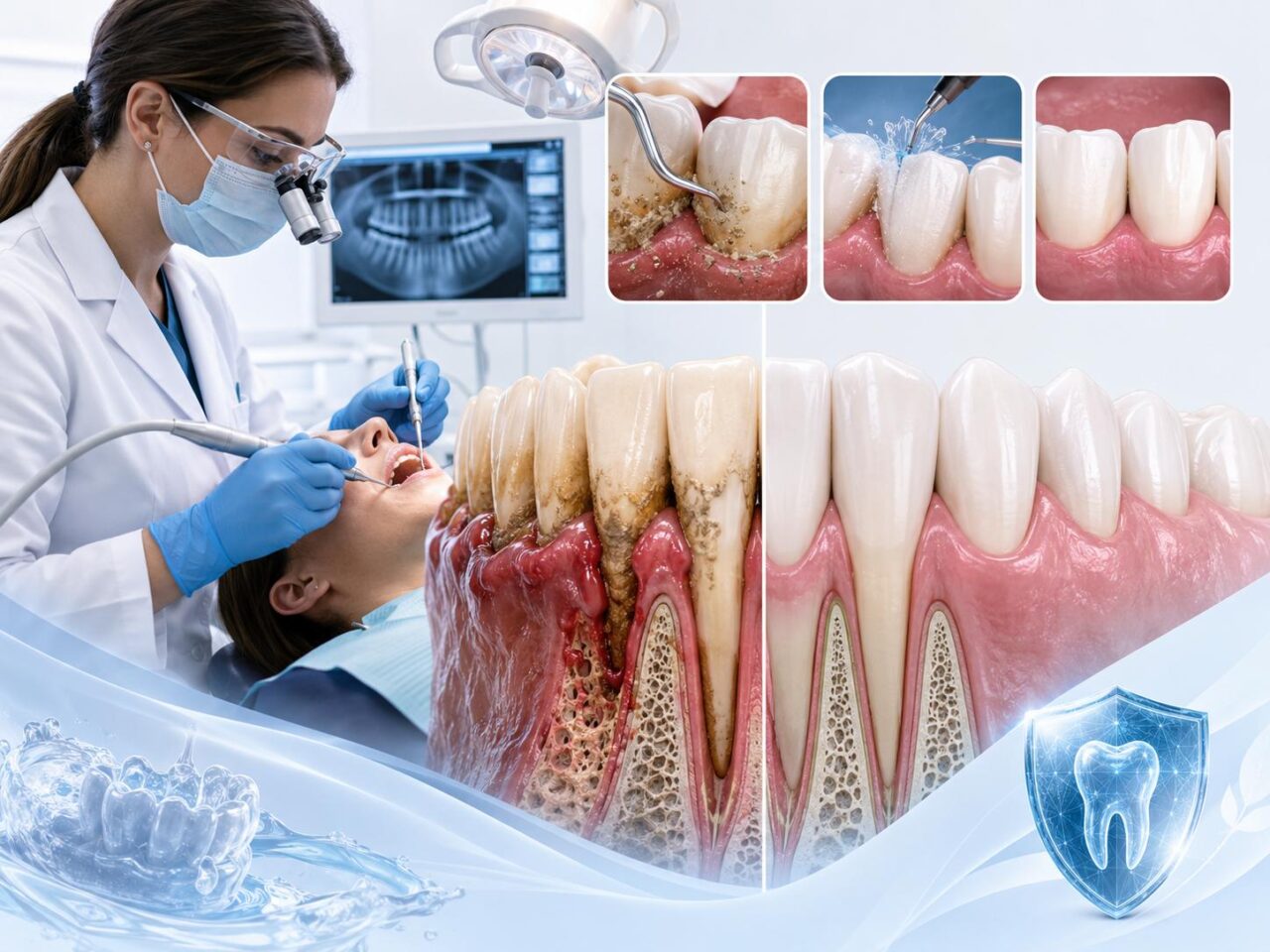
The periodontium, the tissues that surround and support your teeth, is directly linked to your general health. Yet the gums are often neglected until irreversible damage has occurred. Effective gum disease treatment does more than improve appearance: it prevents tooth loss and protects chewing function and quality of life. For patients from the US and the UK, gum disease treatment in Turkey offers specialist periodontal care, laser options and advanced surgery at a fraction of the cost at home. In 2026, modern techniques have made treatment more comfortable, painless and fast-acting than ever.
In this guide we cover the latest methods of gum disease treatment in Turkey, the healing process, what to expect at each step and 2026 prices in USD and GBP, so you can plan with confidence.
What Is Gum Disease Treatment and Why Does It Matter?
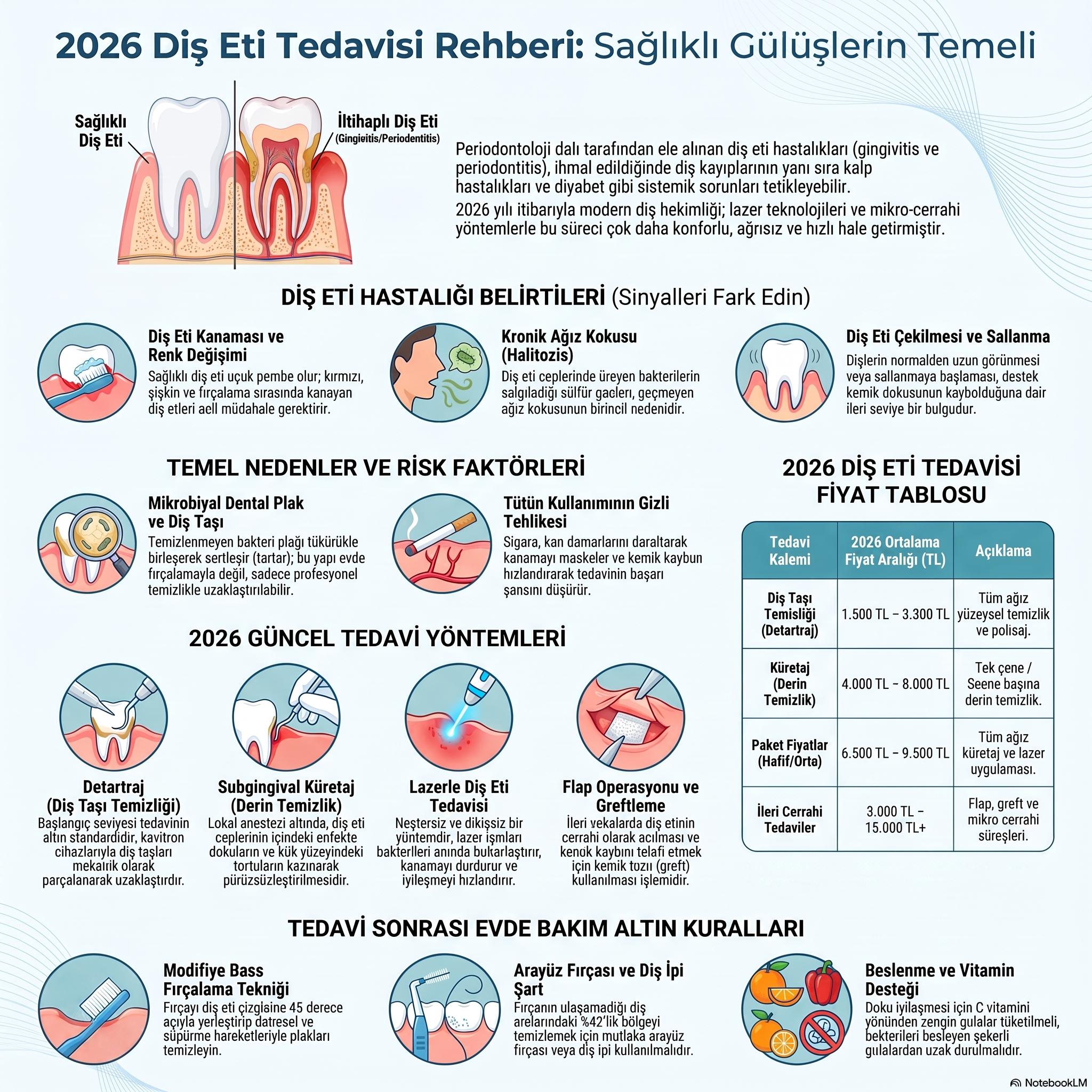
Periodontal disease is the inflammation of the tissues that attach the tooth to the jawbone: the gums, cementum, alveolar bone and periodontal ligament. Caught early, it can be stopped with simple procedures, which keeps gum disease treatment in Turkey quick and affordable; neglected, it may require advanced surgery. Professional treatment removes the bacterial biofilm and calcified deposits that cause the inflammation. The dental specialty that deals with these conditions, and that leads gum disease treatment in Turkey at our clinic, is called periodontology.
Without treatment, infection does not stay in the mouth. Bacteria that enter the bloodstream increase the risk of cardiovascular disease, diabetes complications and respiratory infections. That is why gum disease treatment in Turkey is not only a local dental procedure but also preventive medicine that improves your overall health. Modern treatment ranges from professional cleaning to advanced grafting, and a plan designed by a periodontist can keep even a tooth at risk functioning for many years.
Symptoms of Gum Disease
Gum disease often progresses silently. In the first stage, gingivitis, damage has not reached the bone and is fully reversible. Once it progresses to periodontitis, permanent bone loss begins. If you notice one or more of the following signs, consider gum disease treatment in Turkey or see a local specialist without delay:
- Bleeding and tenderness: healthy gums do not bleed when you brush, floss or bite into an apple. Bleeding on light contact is the most common early sign.
- Changes in colour and shape: healthy gums are pale pink with an orange-peel texture; red, purple, swollen or shiny gums need urgent attention.
- Bad breath (halitosis): persistent bad breath despite good hygiene usually comes from sulphur gases produced by bacteria in gum pockets.
- Gum recession: the gum pulls back and exposes the root, making teeth look longer and sensitive to hot and cold.
- Loose or shifting teeth: as bone support is lost, gaps appear and teeth move when you chew, a late sign that often requires surgery.
- Abscess and pus: discharge from the pockets when pressure is applied indicates an acute infection.
Main Causes of Bleeding, Swollen and Receding Gums
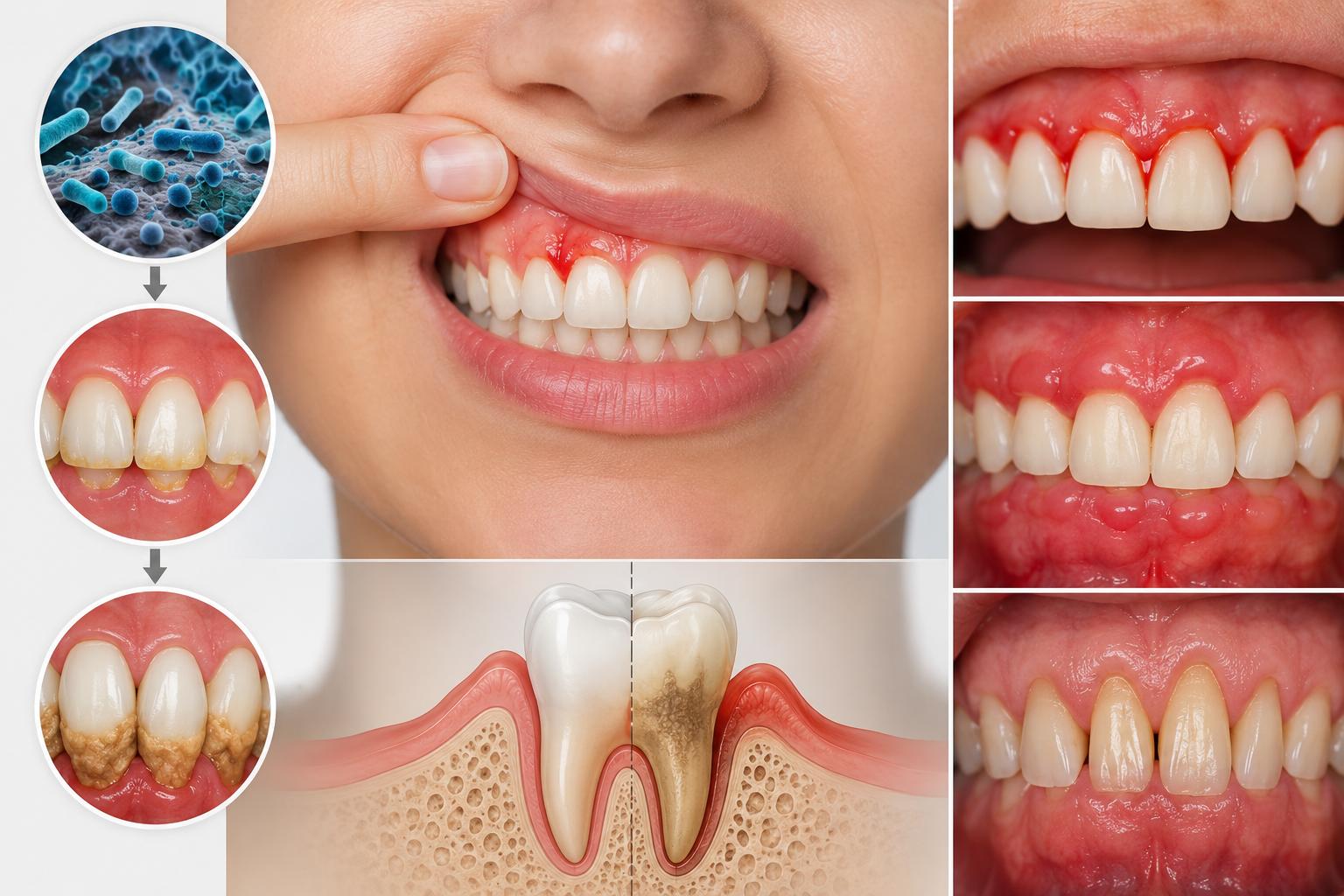
Lasting results from gum disease treatment in Turkey are only possible when the root causes are addressed. The primary cause is bacterial plaque, a sticky, colourless biofilm formed by bacteria, saliva proteins and food debris. If it is not removed with correct brushing, it mineralises into tartar (calculus), whose rough surface attracts even more plaque. Tartar cannot be removed at home; it requires professional cleaning. Secondary factors increase the severity and speed of the disease:
- Smoking: narrows the blood vessels in the gums, weakens defences and masks bleeding. Smokers lose bone faster and respond less well to treatment.
- Genetics: some people are prone to severe periodontitis even with excellent hygiene and need more frequent maintenance.
- Hormonal changes: puberty, pregnancy and menopause can exaggerate the gums’ reaction to plaque.
- Systemic conditions and medication: uncontrolled diabetes accelerates tissue breakdown, and some medications can cause gum overgrowth.
- Poor restorations: overhanging fillings and ill-fitting crowns trap plaque and must be corrected.
Modern Methods of Gum Disease Treatment in Turkey (2026)
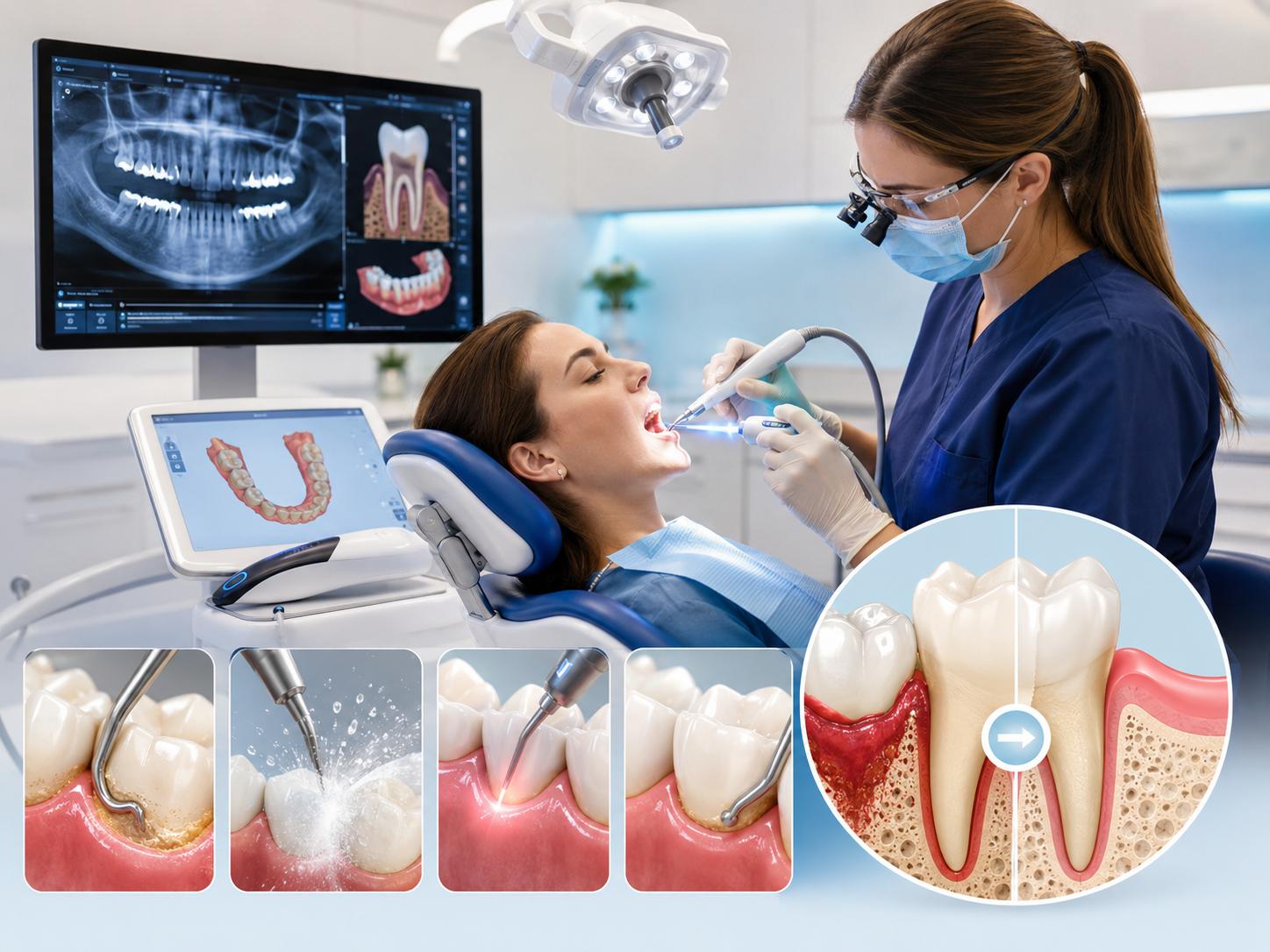
In 2026, gum disease treatment in Turkey focuses on painless, minimally invasive approaches that reduce anxiety. Depending on the severity of the disease and your overall health, a periodontist creates a staged plan that can range from simple cleaning to microscopic surgery that repairs bone defects. Correctly diagnosed and planned, treatment can extend the natural life of your teeth by decades.
Scaling (Professional Cleaning of Tartar and Plaque)
The first and most fundamental step of gum disease treatment in Turkey is professional scaling, which removes calcified deposits and bacterial biofilm. In early gingivitis, scaling combined with good home care is often all that is needed. Ultrasonic instruments vibrate thousands of times per second to break up tartar while a water spray flushes away bacteria, without harming the enamel. Polishing then smooths the surfaces so new plaque struggles to attach. Regular scaling every six months is the most effective way to avoid more complex and expensive treatment later.
Deep Cleaning (Scaling and Root Planing)
When inflammation has passed below the gum line and reached the roots and bone, scaling alone is not enough. Scaling and root planing, often called a “deep clean”, is the core of gum disease treatment in Turkey and is performed under local anaesthesia. Healthy pockets are 1 to 3 mm deep, but in periodontitis they exceed 4 to 5 mm and become an oxygen-free breeding ground for bacteria. Using curettes and ultrasonic tips, the dentist removes infected deposits and toxins from the root surfaces and makes them glass-smooth, so the gum can reattach and the pockets become shallower. This stops active infection and prevents further bone loss.
Laser Gum Treatment
Laser-assisted periodontal therapy is one of the most comfortable options in gum disease treatment in Turkey. Special wavelengths (such as Nd:YAG, Er:YAG or diode lasers) target only inflamed tissue, vaporise bacteria inside the pockets and seal blood vessels, so there is almost no bleeding. This makes laser therapy particularly safe for patients taking blood thinners. Its biostimulating effect also speeds up healing and minimises pain and swelling. At Akdiş Clinic, laser therapy allows scalpel-free, stitch-free and highly successful gum disease treatment in Turkey.
Advanced Surgery: Flap Surgery and Grafts
When pockets exceed 6 mm and do not respond to non-surgical therapy, surgical gum disease treatment in Turkey becomes necessary. In flap surgery, the gums are gently lifted under local anaesthesia so the dentist can see and clean the root surfaces and bone directly, reshape the bone if needed and close the gums with fine stitches. During the same procedure, bone grafts and barrier membranes can be used to regenerate lost bone, which is also important before implants.
For gum recession, a small piece of connective tissue is usually taken from the palate and grafted onto the exposed root, covering it, reducing sensitivity and thickening the gum. For a “gummy smile”, crown lengthening with a laser raises the gum line symmetrically so the teeth look longer, a concept known as pink aesthetics and an essential part of smile design in Turkey.
How Is Gum Treatment Done? Step by Step
Examination, Panoramic X-ray and Diagnosis
Your first visit begins with a detailed medical history, because systemic diseases, medication, genetics and smoking all affect the plan. The dentist then measures the pocket depth around every tooth with a periodontal probe and creates a periodontal chart. Panoramic X-rays or 3D CBCT show the amount of bone loss, bone defects and tartar deposits. Based on this data, the periodontist presents the most suitable plan for your gum disease treatment in Turkey.
Anaesthesia and Comfort
Many patients delay treatment because of dental anxiety, but comfort is now the standard in gum disease treatment in Turkey. Simple scaling rarely requires anaesthesia, while deep cleaning or flap surgery is performed after the area is completely numb. Topical gels prevent you from feeling the injection, and for very anxious patients, conscious sedation allows the whole mouth to be treated in one session.
Healing After Treatment
After non-surgical treatment, a few days of mild sensitivity and minimal bleeding are normal. After flap surgery or grafts, mild swelling may occur in the first 48 hours; cold compresses help, and soft, lukewarm food is recommended for 7 to 10 days. Smoking must be avoided because it seriously delays healing. Within 2 to 4 weeks, the gums usually regain their healthy, pale pink appearance and bleeding stops.
Gum Disease Treatment in Turkey: 2026 Prices
Because every patient’s tissues and stage of disease are unique, there is no single fixed price. The Turkish Dental Association (TDB) minimum tariff provides the reference framework, and clinics set their fees according to technology, materials and expertise. The table below shows average 2026 prices for gum disease treatment in Turkey at well-equipped private clinics, converted from Turkish lira and rounded up.
| Treatment | 2026 price (USD / GBP) | Description |
| Scaling and polishing | $40 – $70 / £30 – £60 | Full-mouth professional cleaning; the starting point of gum treatment |
| Laser and root planing (deep clean) | $90 – $170 / £70 – £130 | Per jaw or per session, with laser disinfection |
| Gum treatment package | $140 – $200 / £110 – £150 | Full-mouth deep cleaning and laser for mild to moderate periodontitis |
| Advanced periodontal surgery | $70 – $310 / £50 – £240 | Flap surgery and grafts, per tooth or area |
Note: prices are based on the TDB 2026 guideline and private clinic averages. Grafts and membranes may change the total. For an accurate plan, contact our specialists through the contact page.
How Do Gum Disease Treatment Prices in Turkey Compare With the US and UK?
In the US, scaling and root planing commonly costs $200 to $400 per quadrant, and periodontal surgery can cost $1,000 to $3,000 per quadrant. In the UK, private deep cleaning is often £150 to £300 per quadrant, and a gum graft can cost several hundred pounds or more. With gum disease treatment in Turkey, a full-mouth deep clean package costs about $140 to $200 (£110 to £150), which is why many patients have their gums treated before veneers, crowns or implants during the same trip.
Factors That Affect the Price
- Severity and extent: localised inflammation around a few teeth costs less than advanced periodontitis throughout the mouth.
- Number of sessions: deep cleaning is often divided into 2 to 4 sessions by quadrant.
- Technology: laser treatment costs slightly more but offers greater comfort and faster healing.
- Specialist expertise: surgery by a periodontist may be priced differently from general dentistry but improves predictability.
- Additional materials: imported bone grafts, collagen membranes and tissue grafts are added to the total.
Planning Gum Treatment During Your Trip
For international patients, gum disease treatment in Turkey with a typical deep clean can be completed within one week, with sessions a few days apart. Surgery and grafts need 7 to 10 days before stitches are removed, and full tissue maturation takes 1 to 2 months, so we plan cosmetic work accordingly. Healthy gums are essential before any crowns, veneers or implants; see our guides to dental implant prices in Turkey and root canal treatment in Turkey if you need other procedures as well.
Why Gum Health Comes Before Cosmetic Dentistry
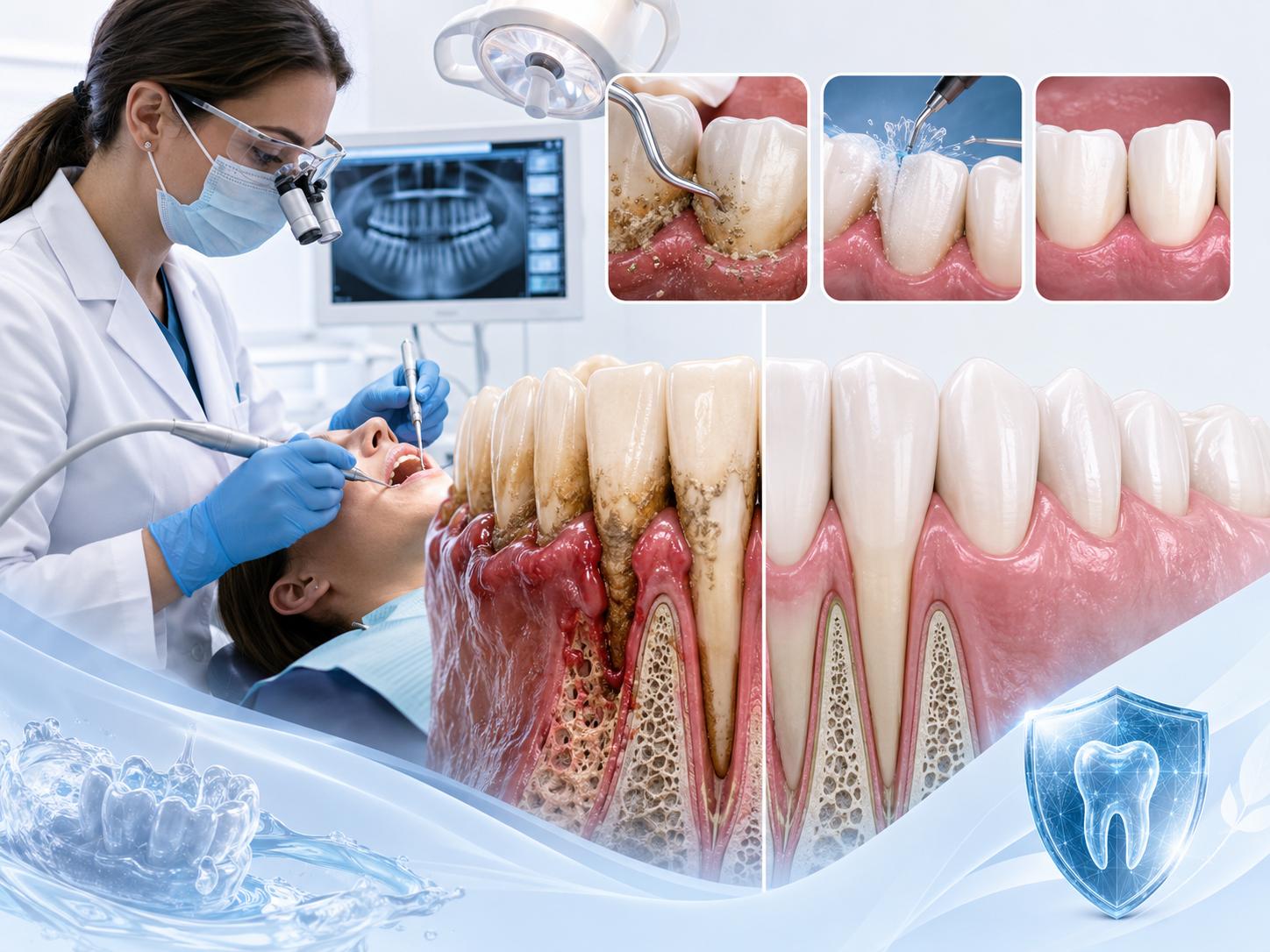
Many patients travel to Istanbul for veneers, crowns or implants and discover during the examination that their gums need attention first. Inflamed gums bleed during impressions, change shape as they heal and can recede after crowns are fitted, exposing dark margins. Implants placed in a mouth with active periodontitis also have a higher risk of peri-implantitis. That is why we always complete gum disease treatment in Turkey before cosmetic or implant work.
The good news is that the two can often be combined in one well-planned trip. A deep clean in the first days allows the gums to settle while digital planning for your new smile continues, and final restorations are placed once the tissues are healthy. Combining gum disease treatment in Turkey with your cosmetic treatment protects your investment and gives far more predictable, longer-lasting results.
Oral Care After Gum Treatment
Professional treatment is only half of the recovery; the other half depends on your home care. Cleaned, smooth root surfaces can be recolonised by bacteria within 24 to 48 hours if they are not protected, so lifelong hygiene habits are essential to keep the results of your gum disease treatment in Turkey.
Correct Brushing, Interdental Brushes and Floss
Periodontists usually recommend the modified Bass technique: place a soft brush at a 45-degree angle where the tooth meets the gum, make small vibrating circular movements and then sweep towards the biting surface. Brush at least twice a day. A toothbrush cannot clean between the teeth, where periodontitis starts and progresses fastest, so interdental cleaning is essential. Interdental brushes clean the larger spaces created by bone loss and recession, while waxed or PTFE floss cleans tight contacts. Brushing alone cleans about 60 percent of the mouth; brushing plus interdental cleaning reaches nearly 100 percent.
Medicated Mouthwash and Diet
After deep cleaning or surgery, your dentist may prescribe a chlorhexidine mouthwash for 10 to 14 days. It prevents plaque from sticking, but longer use can cause staining and changes in taste. For daily use, choose an alcohol-free fluoride mouthwash. Your diet also affects healing: vitamin C from citrus fruit, kiwi, strawberries and leafy greens supports collagen production, and vitamins A and E and omega-3 fatty acids help tissue repair. Limit refined sugar, sticky carbohydrates and acidic drinks, which feed oral bacteria.
Frequently Asked Questions About Gum Disease Treatment in Turkey
How long does gum treatment take and how many sessions are needed?
In gum disease treatment in Turkey, mild gingivitis often needs a single 30 to 45-minute cleaning. Moderate to advanced periodontitis is usually treated in 2 to 4 deep-cleaning sessions a week apart, and surgery can extend the process over months.
How much does gum disease treatment cost in Turkey in 2026?
Scaling costs about $40 to $70 (£30 to £60), and a full-mouth laser deep-clean package about $140 to $200 (£110 to £150). Advanced surgery with bone or tissue grafts costs more depending on the area.
Can receding gums grow back without surgery?
No. Once gum tissue has receded, it does not grow back on its own. Non-surgical treatment stops recession from progressing, but covering exposed roots requires a gum graft.
Is deep cleaning painful?
No. Deep cleaning during gum disease treatment in Turkey is performed under local anaesthesia, so you feel no pain. Mild sensitivity for a few days afterwards is normal and easily controlled with painkillers.
What is the difference between laser and conventional gum treatment?
Laser treatment selectively removes inflamed tissue and sterilises the pockets with minimal bleeding and no stitches, and its biostimulating effect can roughly halve healing time.
Is scaling the same as gum treatment?
Scaling is the first and most essential step, but in advanced stages full gum treatment also includes root planing, pocket treatment and, if needed, surgery.
Will my teeth fall out if periodontitis is not treated?
Yes. Periodontitis gradually destroys the bone supporting the teeth, and untreated gum disease is the leading cause of tooth loss in adults, ahead of decay.
Do home remedies cure gum disease?
Salt water, baking soda or clove oil may temporarily soothe the gums, but they cannot remove hardened tartar or bacteria on the roots. Professional treatment is the only lasting solution.
Conclusion
Healthy gums are the foundation of a healthy smile and a healthy body, and gum disease treatment in Turkey helps you protect both. The earlier you act, the simpler and more affordable treatment will be. If you notice bleeding, swelling or recession, send us your photos or X-rays through our contact page, and the team at Akdiş Clinic will prepare a personalised plan for your gum disease treatment in Turkey.
One thought on “Gum Disease Treatment in Turkey 2026: Proven Laser and Surgical Methods and the Best Price Guide”