

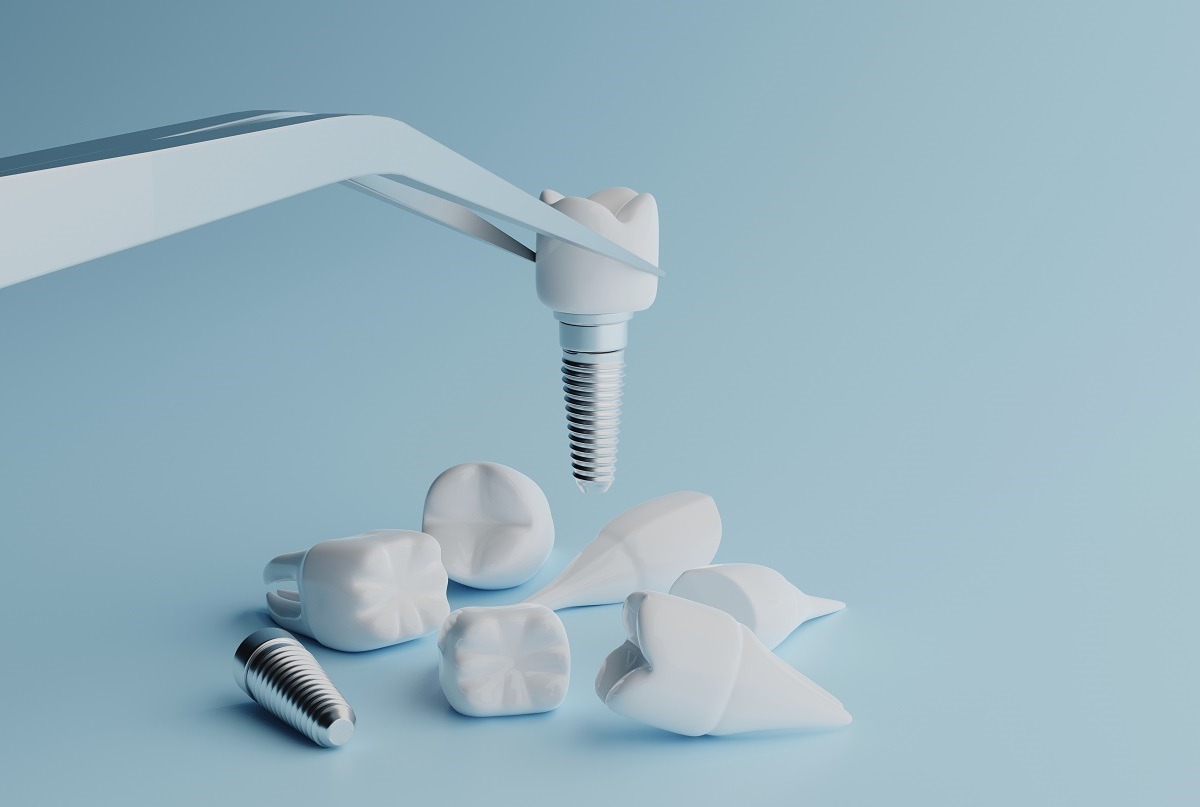
Implantology is the field of dentistry dedicated to the permanent placement of artificial tooth roots in the jaw. Although it may sound complicated, modern implantology allows millions of people to solve problems caused by missing teeth, with results that look, feel and function like natural teeth. Many people who ask “what is implantology?” also want to know how treatment is performed, whether it is painful and how long it lasts. This guide answers those questions clearly for patients in the United States, the United Kingdom and around the world.
In the past, bridges were the standard way to replace a missing tooth. Today, implants are preferred because they are more accessible, do not damage healthy teeth and can last a lifetime. In a bridge, the healthy neighbouring teeth must be ground down, and over time they can be damaged by the extra load. With an implant, the neighbouring teeth are left untouched.
What Is Implantology?
Dentistry is divided into many specialised areas, each with dentists who have advanced training in that field. Implantology is the area that focuses on replacing missing teeth with dental implants: planning, placing and restoring them. It combines surgery, prosthetic dentistry, periodontology and radiology to rebuild a complete, functional smile.
An implantologist evaluates the jawbone, gums and bite, decides where and how implants should be placed and works with a prosthodontist or restorative dentist to design the crowns or bridges on top. In many clinics, oral surgeons and periodontists with additional training in implantology carry out the surgical part, while the restorative part is completed by a dentist experienced in prosthetics.
A Brief History of Implantology
Attempts to replace lost teeth go back thousands of years, with archaeologists finding shells and carved stones placed in ancient jaws. Modern implantology, however, began in the 1950s and 1960s, when Swedish researcher Per-Ingvar Brånemark discovered that titanium fuses permanently with living bone. He called this process osseointegration, and it remains the scientific foundation of implant dentistry today. Since then, implant designs, surfaces and digital planning methods have improved dramatically, and success rates now exceed 95 percent in healthy patients.
Oral Implantology
Oral implantology is the practice of replacing lost teeth with an artificial root that takes over their function. It is widely used around the world and has no negative effect on general health. An implant acts like a real tooth in the mouth and does not cause discomfort. Implants that integrate with the bone are usually screw-shaped, and the visible teeth on top are made of porcelain or zirconia.
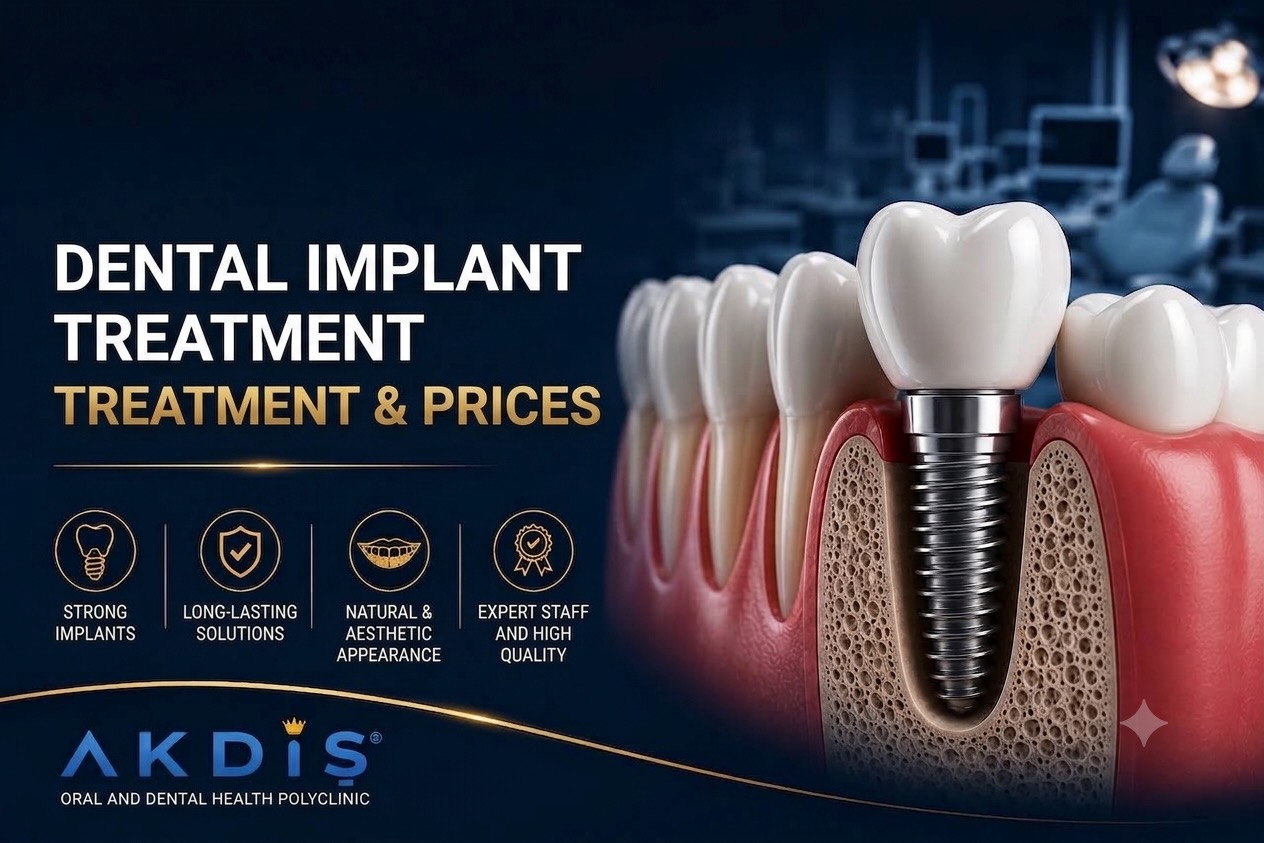
The Parts of an Implant
- Fixture: the titanium screw placed in the jawbone that replaces the root.
- Abutment: the connector that links the fixture to the visible tooth.
- Crown or bridge: the visible tooth or teeth, usually made of zirconia or porcelain.
Oral Implantology in Modern Dentistry
Today, implants are made of titanium. Titanium is a highly reliable material used in many areas of medicine, such as hip and knee replacements, because it is extremely compatible with human tissue. For use in implantology, it is shaped like a root, cylinder or screw and then treated with special surface processes that help bone cells attach faster. In short, titanium remains the material of choice in modern implant dentistry.
Zirconia implants, made entirely of ceramic, are an alternative for patients with metal sensitivities or those who prefer a metal-free solution. They are white, highly biocompatible and aesthetically pleasing, although titanium still has the longest track record and the widest range of components.
Implant treatment is much easier today than in the past. If a single tooth is missing, an implant can be placed in the gap to restore the smile. However, if a person has been without teeth for a long time, the bone shrinks and implant placement becomes more complex. That is why anyone who has lost teeth should see a dentist without delay, so that the problem can be solved as simply as possible.
Types of Dental Implants
- Endosteal implants: the most common type, placed directly into the jawbone.
- Mini implants: narrower implants used to stabilise dentures or in areas with limited space.
- Zygomatic implants: extra-long implants anchored in the cheekbone when the upper jawbone is severely resorbed.
- Full-arch concepts: All-on-4 and All-on-6 systems that support a complete fixed bridge on four or six implants.
How Does Implant Treatment Work?
Although implant surgery is a surgical procedure, patients usually recover within about a week with the help of prescribed medication, and most feel little or no pain afterwards. The treatment process in implantology follows a clear sequence:
- Consultation and 3D planning: a CBCT scan shows the width, height and density of the bone and the position of nerves and sinuses. Digital software is used to plan the exact position of each implant.
- Preparing the site: if necessary, a bone graft or sinus lift is performed first to create enough bone.
- Implant placement: under local anaesthesia, the implant is placed in the bone, usually in 30 to 60 minutes.
- Healing: over 2 to 4 months, the implant fuses with the bone. A temporary tooth can often be worn during this period.
- Final restoration: an abutment is attached, and a custom crown or bridge is fitted.
Is Implant Treatment Painful?
Dental treatment is often imagined as difficult and painful, but today it is far more comfortable. Local anaesthetics numb the area completely, so patients do not feel pain during implant placement. For anxious patients, sedation can also be used. After surgery, mild swelling and discomfort may last a few days and are easily controlled with painkillers and cold compresses. What seems like a daunting procedure is, in practice, easily managed by most patients.
Digital Implantology and Guided Surgery
One of the biggest advances of recent years is digital implantology. Instead of relying only on two-dimensional X-rays and the surgeon’s judgement during surgery, the entire procedure can now be planned on a computer before the patient sits in the chair.
First, a CBCT scan creates a three-dimensional image of the jaw, showing bone width, height and density as well as the exact position of nerves, blood vessels and sinuses. Next, an intraoral scanner records the teeth and gums digitally. The two data sets are merged in planning software, where the ideal final tooth is designed first and the implant is then positioned to support it perfectly. This “prosthetically driven” approach ensures the crown will look natural and receive chewing forces in the right direction.
From this plan, a surgical guide can be 3D-printed. During surgery, the guide fits over the teeth or gums and directs the drill to the exact planned angle and depth. Guided surgery is often less invasive, sometimes without the need to open the gum, which means less swelling, faster healing and greater predictability, especially in complex cases.
Bone Grafting and Sinus Lifts
After a tooth is lost, the bone that once supported it begins to shrink, because it no longer receives stimulation from chewing. After several years, there may not be enough bone to hold an implant securely. Fortunately, bone regeneration techniques have become a routine part of modern implantology.
- Socket preservation: graft material placed immediately after an extraction helps preserve the bone for a future implant.
- Bone augmentation: synthetic, animal-derived or the patient’s own bone is used to increase the width or height of the jaw, often covered with a protective membrane.
- Sinus lift: in the upper back jaw, the sinus floor is gently raised and graft material is added beneath it to create room for implants.
Depending on the size of the defect, grafting can be done at the same time as implant placement or a few months beforehand. Your surgeon will explain which approach is safest based on your 3D scan.
Implant-Supported Dentures and Full-Arch Solutions
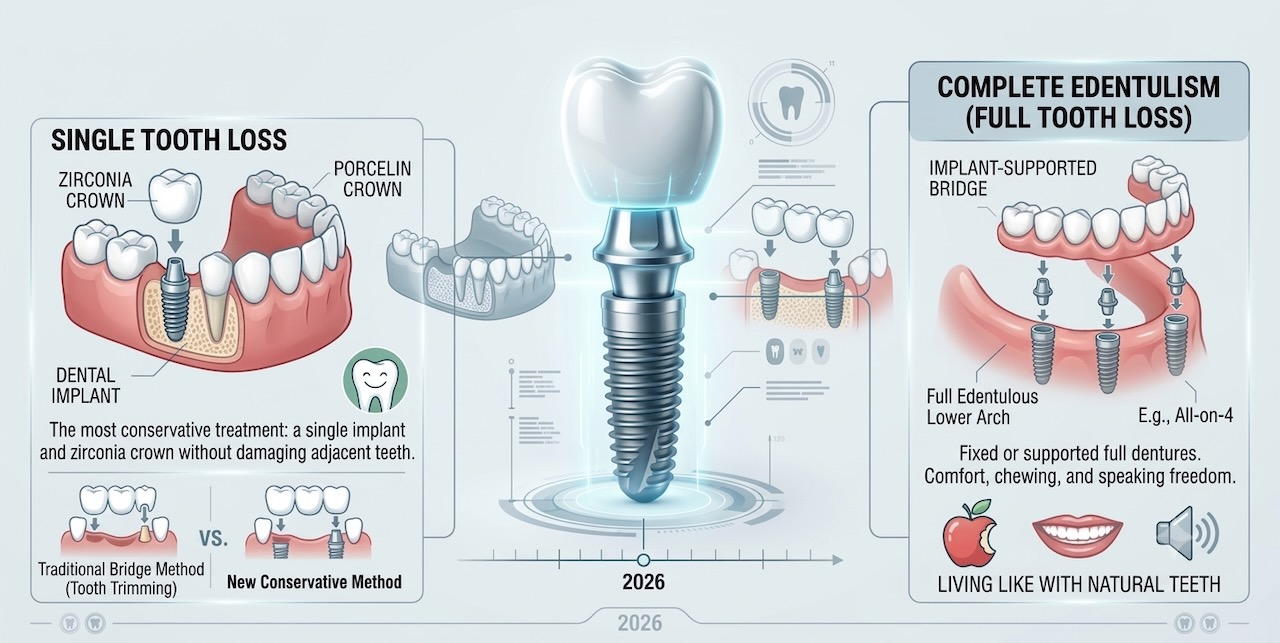
For people who wear complete dentures, implants can make a dramatic difference. Even two implants in the lower jaw can hold a denture firmly in place with special attachments, stopping it from moving while eating or speaking. These overdentures can still be removed for cleaning but feel far more secure than a conventional denture.
For a completely fixed solution, four to six implants can support a full bridge of teeth that is not removed at home. In many cases, temporary fixed teeth can be attached on the day of surgery, and the final bridge made of zirconia or acrylic is fitted after healing. For many patients, this is the most life-changing result that dentistry can offer.
Recovery Timeline After Implant Surgery
- Day 1 to 2: mild swelling and discomfort; use cold compresses, rest and eat soft, cool food.
- Day 3 to 7: swelling decreases; continue gentle hygiene and avoid chewing on the implant area.
- Week 2: stitches, if used, are removed or dissolve; most people feel completely normal.
- Months 2 to 4: the implant fuses with the bone; a temporary tooth may be worn.
- After healing: the final crown or bridge is fitted, and regular check-ups begin.
Who Is a Good Candidate for Implants?
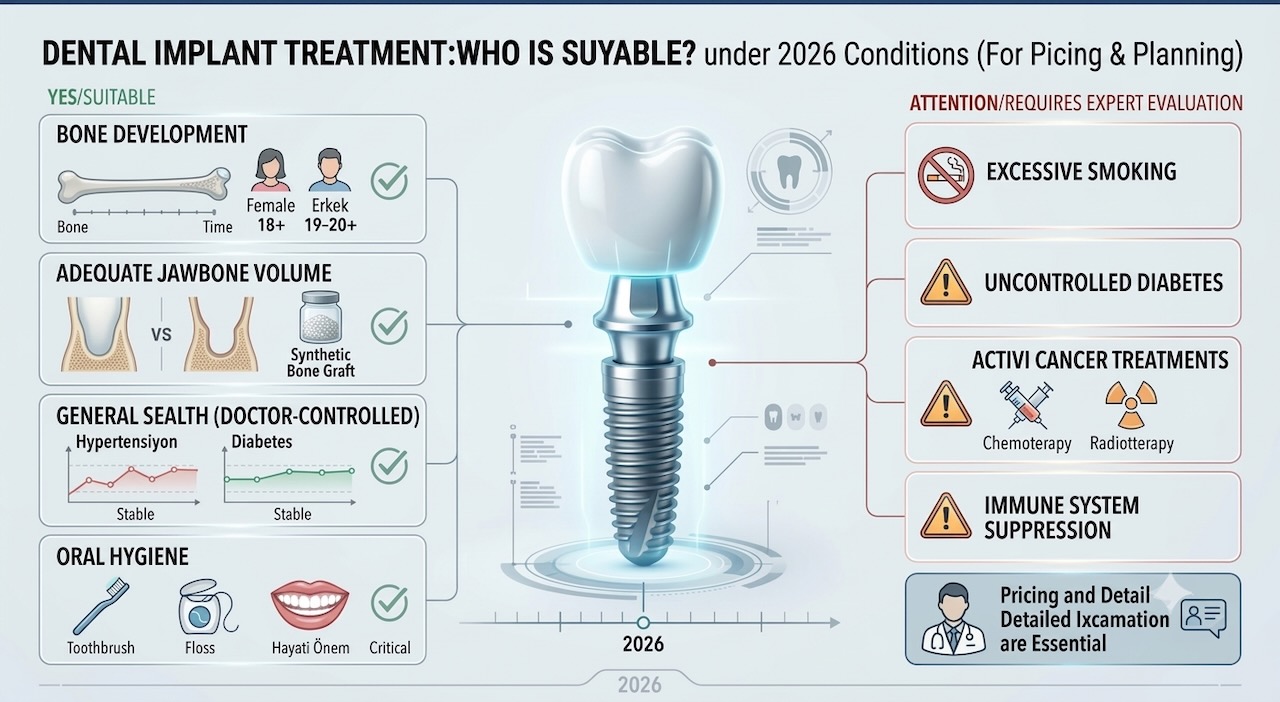
Most adults with missing teeth can benefit from implantology. Good candidates generally have:
- A fully developed jaw (usually over 18 years of age).
- Enough bone to support an implant, or the possibility of rebuilding it with a graft.
- Healthy gums, or gum disease that has been treated first.
- General health that allows minor oral surgery.
Heavy smoking, uncontrolled diabetes and certain medications that affect bone can reduce success, so these need to be discussed with the implantologist. With good planning, however, even many patients once considered unsuitable can now receive implants thanks to advances in implantology.
Implants vs. Bridges: Why Implantology Has Changed Dentistry
Before implants became widespread, a missing tooth was usually replaced with a bridge, which required cutting down the two neighbouring teeth to support a false tooth in between. Those teeth then carried extra load and were more prone to decay and fracture. Removable dentures, meanwhile, often moved while eating and accelerated bone loss.
Implantology changed this completely. An implant replaces the root itself, so it stands alone, protects the bone and leaves healthy teeth intact. For patients who have lost all their teeth, full-arch implant bridges have replaced loose dentures with fixed teeth that allow them to eat, speak and laugh with confidence. This is why implantology is considered one of the greatest advances in modern dentistry.
Success Rates and Lifespan
Implants have one of the highest success rates of any procedure in dentistry, typically above 95 percent after ten years in healthy patients. The implant itself can last a lifetime, while the crown may need to be replaced after 10 to 15 years because of normal wear. Success depends on correct planning, surgical skill, the quality of the implant system and, above all, your oral hygiene and regular check-ups.
Possible Risks and How They Are Prevented
- Infection: prevented by sterile surgery and good hygiene during healing.
- Failure to integrate: more likely in smokers and uncontrolled diabetics; careful patient selection reduces the risk.
- Nerve or sinus complications: avoided with precise 3D planning and experienced surgeons.
- Peri-implantitis: inflammation around the implant, prevented with daily cleaning and professional check-ups.
It is also worth remembering that implant treatment is a partnership. The surgeon and restorative dentist are responsible for careful planning and precise work, while the patient is responsible for daily cleaning, attending check-ups and following aftercare advice. When both sides do their part, dental implants are one of the most reliable and satisfying treatments in all of medicine, and most patients say they wish they had chosen implants sooner.
Caring for Your Implants
Implants cannot decay, but the gums and bone around them need the same care as natural teeth. Brush twice a day, clean around each implant with interdental brushes or a water flosser, avoid biting very hard objects and have a professional cleaning every six months. If you grind your teeth, a night guard protects the implants and crowns. Good maintenance is the key to keeping the results of implantology for life.
How to Choose an Implantology Clinic
Because implants are a long-term investment, choosing the right clinic is just as important as choosing the right implant. When comparing clinics for implantology, whether at home or abroad, consider the following points:
- Experience and training: ask who will place your implants, how many implant procedures they perform each year and what additional training they have completed.
- Diagnostic technology: an in-house CBCT scanner and digital planning software are signs of a clinic that takes precision seriously.
- Implant brands: reputable clinics use certified systems with long-term clinical research and can tell you exactly which brand and model they recommend and why.
- Sterilisation: surgery should be performed in a sterile environment with instruments processed in class B autoclaves.
- Transparency: you should receive a written plan with itemised costs, including any grafting, abutments and crowns, before treatment begins.
- Aftercare: ask what follow-up is included, how the clinic handles problems and whether you will receive an implant passport with the details of every implant.
A clinic that answers these questions openly and in detail is far more likely to deliver a predictable, long-lasting result than one that competes only on price. Good implantology is never rushed; it is based on careful diagnosis, honest advice and a plan designed around your individual needs. If you are unsure, it is always worth asking for a second opinion before making a decision.
Implantology in Istanbul: Cost and Planning
Many patients from the US and UK choose to have implant treatment in Istanbul, where specialist implantology is available at a fraction of the cost at home. A typical plan involves two trips: one for surgery and one, about 3 months later, for the final crowns. For detailed prices by brand, see our guides to dental implant prices in Turkey and dental implants in Istanbul.
Frequently Asked Questions About Implantology
What does an implantologist do?
An implantologist plans and places dental implants and coordinates the restoration on top. The role may be carried out by an oral surgeon, periodontist or dentist with advanced training in implantology.
How long does implant treatment take?
Placement takes about 30 to 60 minutes per implant, and healing takes 2 to 4 months before the final crown is fitted. Complex cases with bone grafting may take longer.
Are titanium implants safe?
Yes. Titanium has been used safely in medicine for decades and is highly biocompatible. Allergies to titanium are extremely rare.
Can I get implants if I have lost bone?
Often yes. Bone grafting, sinus lifts, angled implants or zygomatic implants make treatment possible for many patients with bone loss.
How long do implants last?
With good care, the implant itself can last a lifetime, and crowns typically last 10 to 15 years.
Conclusion
Implantology has transformed the way missing teeth are replaced. With titanium implants, 3D planning and modern surgical techniques, patients can enjoy fixed, natural-looking teeth that protect the jawbone and last for decades. If you have lost one or more teeth, contact our team through the contact page or learn more on our dental implants page. The specialists at Akdiş Clinic in Istanbul will be happy to answer your questions and prepare a personalised treatment plan.