

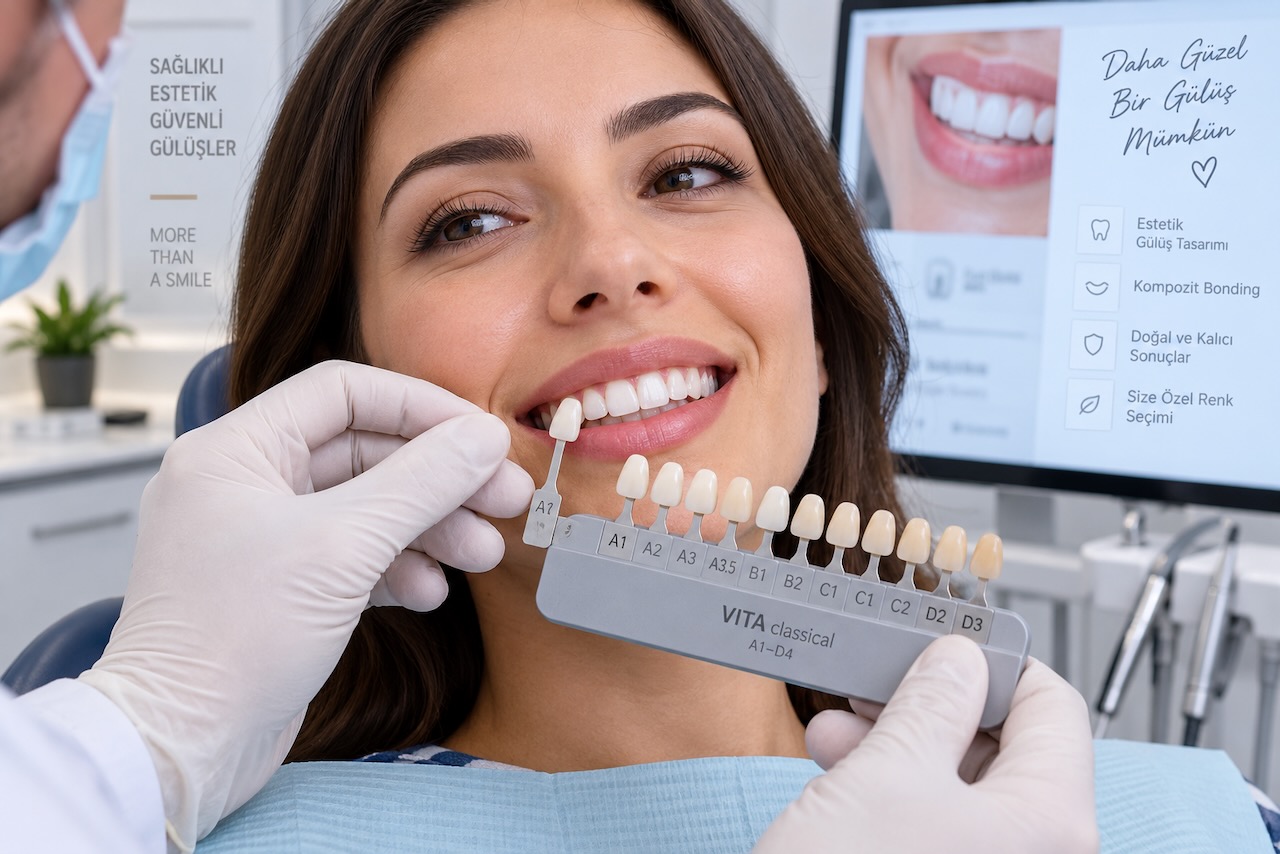
A beautiful smile has a direct effect on self-confidence, and modern cosmetic dentistry aims to achieve it without cutting healthy tooth structure. That is why composite bonding prices in Turkey are among the most researched topics for patients from the US and the UK in 2026. People are looking for a treatment that meets high aesthetic expectations, preserves natural enamel and still fits a realistic budget, and composite bonding prices in Turkey tick all three boxes.
Also known as direct veneers, cosmetic bonding or edge bonding, this method is widely used to close gaps between the front teeth (diastema), repair chipped or worn teeth, mask discolouration and lengthen short teeth. Compared with porcelain veneers or zirconia crowns, which cost more and may require enamel reduction, bonding is a conservative option, and composite bonding prices in Turkey make it even more economical.
In this guide we explain composite bonding prices in Turkey for 2026 in US dollars and British pounds, based on the Turkish Dental Association (TDB) tariff and private clinic data, and we compare them with typical costs back home. We also cover the materials, the step-by-step procedure, aftercare and the questions international patients ask most often. You can explore our treatments on the Akdiş Clinic website at any time.
What Is Composite Bonding and When Is It Used?
Composite bonding is the process of chemically and mechanically attaching a tooth-coloured dental composite resin, a blend of organic polymers and inorganic fillers, to the surface of the tooth. “Bonding” simply means attachment. As the foundation of adhesive dentistry, it allows visible aesthetic changes in a single session without damaging the enamel.
Traditional crowns require removing tooth tissue, whereas bonding either leaves the enamel untouched or only roughens it at a microscopic level. It is therefore a conservative procedure that relies on the strength of modern adhesives. In our clinic we mainly use bonding for:
- Diastema: closing unwanted gaps between the front teeth without any cutting.
- Chipped or broken teeth: restoring the shape of teeth damaged by trauma.
- Worn teeth: lengthening and reshaping teeth shortened by grinding (bruxism) or age.
- Discolouration: covering stubborn internal stains, including tetracycline staining, that do not respond to whitening.
- Asymmetry: correcting differences in tooth size and shape to create a balanced smile line.
One of the biggest advantages is that you can leave the chair with your aesthetic concerns solved on the same day. Because no lab stage is required, direct composite veneers fit perfectly into a short trip to Istanbul, and composite bonding prices in Turkey stay predictable.
The Biomimetic Approach and Nanocomposite Technology
Biomimetic dentistry, which means imitating nature, has transformed aesthetic treatment. The aim is to restore lost tooth tissue with materials that match natural teeth in both strength and optical properties such as translucency, fluorescence and opalescence. Nanocomposite technology sits at the heart of this philosophy.
Conventional composites contain micron-sized filler particles, while nanocomposites use particles of 1 to 100 nanometres. This gives the material two major benefits: high wear resistance and an excellent polish. Enamel and dentin layers are recreated with composites of different optical density, layer by layer, so the result looks natural in daylight and under camera flash. All cosmetic bonding at Akdiş Clinic is performed with internationally recognised nanocomposite systems, which is an important quality factor behind composite bonding prices in Turkey.
Advantages and Disadvantages of Bonding
Like every treatment, bonding has clear benefits and some limitations. Weighing them honestly, not just comparing composite bonding prices in Turkey, is key to long-term satisfaction.
Advantages:
- Maximum tissue preservation: little or no enamel is removed, and the treatment is reversible.
- Single-session speed: no lab time, so most cases are finished in a 1 to 2 hour appointment.
- Affordable cost: much more budget-friendly than porcelain veneers or ceramic crowns.
- Rarely needs anaesthesia: because work stays within the enamel, local anaesthesia is often unnecessary.
- Easy repair: chips can be repaired in minutes by adding material, without replacing the whole restoration.
Disadvantages and limitations:
- Staining: composite is slightly porous, so coffee, tea and smoking can cause surface staining over time; regular polishing solves this.
- Lower strength: it is less resistant to impact and heavy biting than porcelain or zirconia.
- Lifespan: porcelain veneers can last 15 to 20 years, while composite bonding typically lasts 5 to 10 years.
Factors That Determine Composite Bonding Prices in Turkey in 2026
A common frustration online is the lack of one clear, fixed price. The reason is that every smile is a personalised piece of aesthetic work, so composite bonding prices in Turkey depend on your case. When composite bonding prices in Turkey are calculated, there is a big difference between treating one tooth and restoring the whole smile line. The factors below are assessed during your examination, and your budget is finalised accordingly.
Number of Surfaces and Extent of Damage
Dentists classify restorations by the number of surfaces involved: front (facial), back (lingual) and sides (proximal). The more surfaces, the more material and chair time are needed, and the higher composite bonding prices in Turkey become.
- Single-surface restorations: removing a small stain or making a minor shape change on the front surface; the lowest-cost group.
- Two and three-surface restorations: corner fractures or aesthetic fillings between the teeth; more work is required.
- Full-face direct veneers: the entire front surface is reshaped with nanocomposite. This is known as a composite veneer and has the highest material and labour ratio.
The width of a gap also matters. If the space between two teeth is wide, both neighbouring teeth must be bonded to keep the smile symmetrical, so composite bonding prices in Turkey are calculated over two teeth.
Dentist Experience and Material Quality
Composite bonding is one of the areas where a dentist’s hand skills and artistry matter most. Unlike bonding a ready-made porcelain shell, the dentist sculpts the tooth freehand, directly in your mouth. The dentist’s aesthetic vision, experience and mastery of adhesive techniques are therefore the most important variables in composite bonding prices in Turkey.
The other critical factor is the brand and generation of the nanocomposite and adhesive. Premium Japanese, German or American nanocomposites with proven clinical results, high colour stability and a refractive index close to natural enamel cost more than standard filling materials. This quality difference is reflected in composite bonding prices in Turkey and directly affects how glossy and durable the restoration remains over the years.
Clinical experience note: in our clinic we not only use high-end nanocomposites but also regularly check the wavelength calibration of our curing lights. A composite that is not properly polymerised can change colour quickly and fail sooner.
Composite Bonding Prices in Turkey 2026: Price Table
Minimum and average fees in dentistry are updated every year according to professional bodies and market conditions. For 2026, composite bonding prices in Turkey are based on the Turkish Dental Association guideline tariff, while location, technology and the nanocomposite generation used shape the private clinic range.
TDB 2026 Minimum Fees and Private Clinic Ranges
The TDB fee schedule sets the minimum that dentists in Turkey may charge. Private composite bonding prices in Turkey vary with the detail of the procedure, the dentist’s expertise and the import cost of materials. All figures below are converted from Turkish lira and rounded up.
| Procedure | TDB 2026 minimum (incl. VAT) | Private clinic range 2026 |
| Dental examination | $40 / £30 | $40 – $70 / £30 – £50 |
| Composite bonding (one surface) | $70 / £60 | $80 – $140 / £60 – £110 |
| Composite bonding (two surfaces) | $90 / £70 | $100 – $170 / £70 – £130 |
| Composite bonding (three surfaces) | $110 / £90 | $120 – $210 / £90 – £160 |
| Direct composite veneer (cosmetic bonding) | $200 / £150 | $200 – $380 / £150 – £290 |
| Bonding repair (single tooth) | $60 / £50 | $70 – $120 / £50 – £90 |
Source note: based on the Turkish Dental Association January 2026 fee schedule and private clinic data across Turkey (September 2026).
Important: prices vary with the clinic’s location, the dentist’s seniority, the condition of the tooth, the material brand and the difficulty of the case. Your exact price is confirmed after an examination. For a personal quote, reach our team through the contact page.
How Do Composite Bonding Prices in Turkey Compare With the US and UK?
In the United States, composite bonding commonly costs around $300 to $600 per tooth, and composite veneers on a full smile can exceed $5,000. In the UK, private practices typically charge £200 to £400 or more per tooth, and cosmetic bonding is not available on the NHS. By comparison, composite bonding prices in Turkey are often 50 to 70 percent lower, which is why many patients combine treatment with a short city break in Istanbul.
For eight front teeth, a typical “smile bonding” case, the difference in composite bonding prices in Turkey can easily cover flights and a hotel. Still, choose your clinic for its standards, not only its price: ask about the composite brand, the dentist’s experience and whether you will see a mock-up first.
Diastema Closure and Cosmetic Bonding Costs
Closing gaps between the front teeth is priced differently from a standard filling. Both neighbouring teeth are treated symmetrically so that the natural shape is preserved and a healthy emergence profile is created at the gumline.
For example, closing the gap between the two upper front teeth means placing direct composite veneers on both teeth. Based on 2026 clinic data, closing a single diastema usually costs about $150 to $330 (£110 to £250) in total. If there are gaps across the whole smile (6 to 8 teeth) or all teeth need lengthening, the treatment can be planned as a smile design package, which often brings composite bonding prices in Turkey down per tooth. Learn more on our smile design page.
Composite Bonding vs. Porcelain Veneers: Price Comparison
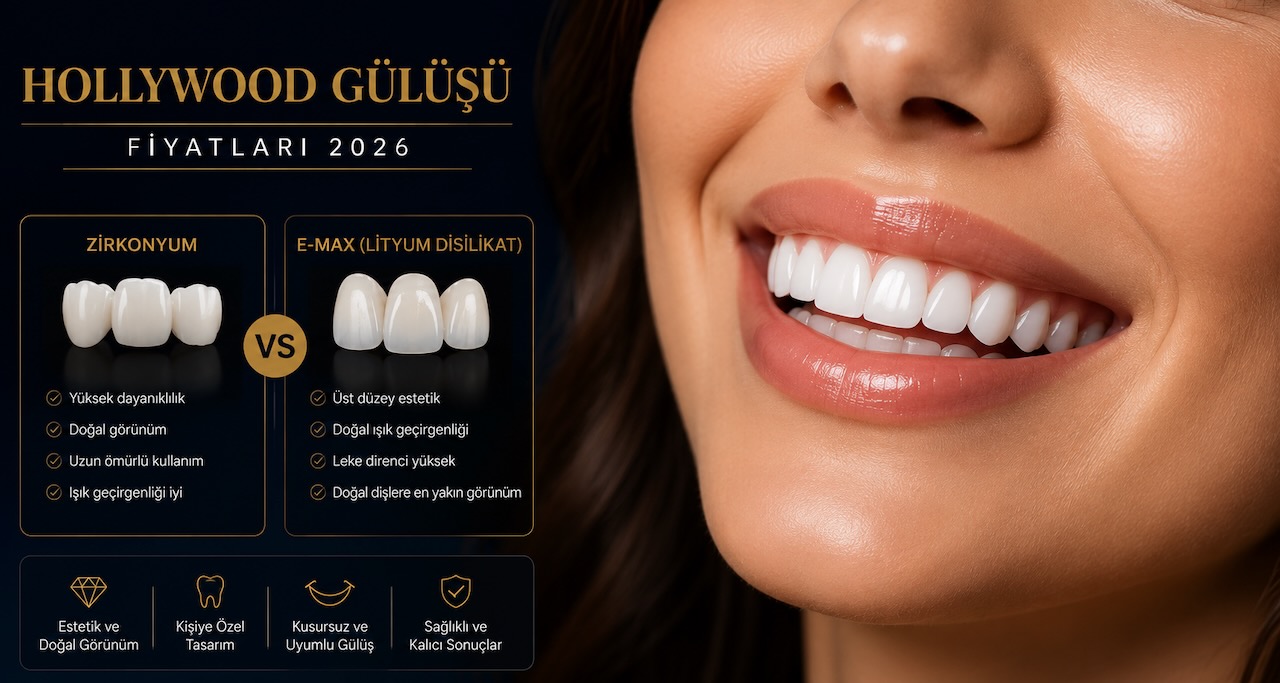
Many patients hesitate between composite and porcelain veneers. Both can deliver excellent results, but porcelain costs and composite bonding prices in Turkey differ greatly, and the two treatments also differ in philosophy and production. When deciding, look not only at the upfront cost but also at the long-term cost-benefit ratio.
Cost, Lifespan and Durability: Which Makes More Sense?
- Upfront cost: bonding has no ceramic lab fee and is completed by the dentist in one session, so it is about 2 to 3 times cheaper than porcelain. In 2026, porcelain veneers in Istanbul cost around $370 to $720 (£280 to £550) per tooth, while composite bonding prices in Turkey are far more accessible.
- Lifespan and durability: porcelain veneers resist wear and staining exceptionally well and can last 15 to 20 years. Composite restorations last 5 to 10 years and need periodic polishing.
- Effect on tooth tissue: porcelain veneers need a precise reduction of about 0.3 to 0.7 mm of enamel, whereas bonding is usually “no-prep”. Bonding is the clear winner for tissue preservation.
- Repairability: a cracked porcelain veneer must be removed and remade in the lab, which is an extra cost. A chipped bond can be repaired on the same day in 20 to 30 minutes for a small fee.
In short, for patients with a limited budget, those who do not want any cutting, those who need a quick result and younger patients, composite bonding prices in Turkey offer a very rational choice. Patients with a larger budget who want maximum gloss without staining for many years may consider porcelain veneers; our guide to Hollywood smile prices in Turkey compares those options in detail.
How Is Composite Bonding Done? Step by Step
High-quality bonding follows a precise, staged protocol. At Akdiş Clinic, our adhesive restoration process follows international standards, and every step is included in our composite bonding prices in Turkey:
Examination and Shade Selection
The first and most critical step is a clinical and radiological examination. Gum health is assessed, and if there is inflammation or tartar, a professional cleaning is done first. Then composite shades that match your natural teeth perfectly are selected.
Shade selection uses dental shade guides such as the VITA scale and daylight-balanced lighting. Separate translucent nanocomposite shades are chosen for the incisal edge, completing the biomimetic plan.
Surface Preparation and Adhesive Bonding
The tooth is isolated from saliva, which is the most vital factor for successful adhesion. The following steps then create a chemical bond between the composite and the tooth:
- Etching: 37 percent phosphoric acid is applied to the enamel for 15 to 20 seconds to create microscopic pores.
- Rinsing and drying: the acid is rinsed away and the surface is gently dried.
- Adhesive application: the liquid bonding agent is rubbed into the surface with a micro-brush.
- Light curing: an LED curing light hardens the adhesive layer, creating a solid base for the composite.
Layering, Contouring and Polishing
Next comes the artistic stage. Instead of a single block of composite, an anatomical layering technique is used: the opaque dentin core, the enamel and the translucent edges are each built with different nanocomposites, and every layer is cured individually.
Once the shape is complete, the margins are blended seamlessly with the natural tooth. Final polishing with aluminium oxide discs, diamond pastes and felt brushes makes the surface glass-smooth. A smooth surface prevents food debris and pigments from sticking, which is essential for a long-lasting result.
Aftercare: How to Make Composite Bonding Last Longer
The answer to “how long does composite bonding last?” depends largely on your oral care after treatment, and good care makes composite bonding prices in Turkey even better value. Nanocomposites bonded to enamel are strong, but hard biting and poor hygiene can shorten their lifespan. To protect your investment:
- Good oral hygiene: brush at least twice a day with a soft brush and a non-abrasive fluoride toothpaste, and floss every evening.
- Avoid hard foods and habits: do not crack nuts, bite ice, chew pens or bite your nails with your front teeth; slice apples and carrots instead.
- Wear a night guard if you grind: a custom guard absorbs the excessive forces of bruxism.
- Regular check-ups and polishing: a visit every 6 months allows the margins to be checked and any dullness to be polished away.
Diet Tips to Prevent Staining
Modern nanocomposites are highly resistant to discolouration, but composite resin can absorb tiny amounts of liquid. The first 48 hours after treatment are considered a critical window while the resin network fully stabilises.
A “white diet” for the first 48 hours: avoid all strongly pigmented foods and drinks, including tea, coffee, red wine, cola, berry juices, tomato sauces, soy sauce, curry, beetroot and smoking.
- Use a straw for iced coffee, cola and other dark or acidic drinks.
- Rinse with water after coffee or tea to stop pigments from settling on the surface.
- Be careful with chlorhexidine mouthwash: long-term use can cause brown staining on teeth and composite, so use it only when your dentist recommends it.
Complications and How They Are Solved
Bonding has a very high success rate, but knowing the possible problems helps you set realistic expectations and understand how easy repairs are compared with composite bonding prices in Turkey for a new restoration.
- Margin staining: thin brown lines can appear where composite meets tooth, usually due to insufficient polishing or heavy pigment intake. The edge is re-polished without harming the tooth.
- Chipping: biting hard foods, trauma or grinding can chip the edge. There is no need to remove the whole restoration; the area is re-bonded in 15 to 20 minutes.
- Post-operative sensitivity: mild hot and cold sensitivity for a few days is normal. If it persists, the bite is checked and adjusted.
- Loss of gloss: over the years, brushing and eating naturally dull the surface. A 10-minute polish at your yearly check-up restores the shine.
Bonding for Patients Who Grind Their Teeth
People with bruxism can generate chewing forces 4 to 6 times higher than normal, which increases the risk of chipping. Bruxism does not rule out bonding, but at Akdiş Clinic we follow a special protocol: we analyse your bite so that the edges are not directly loaded during sliding movements, we use flexible low-modulus nanocomposites underneath and we provide a custom night guard on the day treatment is completed.
The Future: Smart Composites and Digital Bonding
Dental materials are evolving quickly, and so are composite bonding prices in Turkey. Three innovations are shaping bonding in 2026 and beyond. Self-healing composites contain microcapsules that release a repairing agent when a microscopic crack appears. Single-shade “chameleon” composites adapt to the colour of the surrounding tooth and reduce shade mismatches. Finally, the injection moulding technique uses a 3D-printed clear guide based on your digital smile design, into which flowable composite is injected for micron-precise direct veneers.
Frequently Asked Questions About Composite Bonding Prices in Turkey
How much does composite bonding cost in Turkey in 2026?
The TDB minimum for single-surface bonding is about $70 (£60). In private clinics, depending on the scope, the nanocomposite brand and the dentist’s experience, composite bonding prices in Turkey range from about $80 to $380 (£60 to £290) per tooth.
How much is bonding for a single tooth?
Within composite bonding prices in Turkey, a small chip or surface filling costs about $80 to $140 (£60 to £110), while a full direct composite veneer covering the entire front surface costs about $200 to $380 (£150 to £290).
How long does composite bonding last?
With a good adhesive protocol, quality nanocomposite and good oral hygiene, composite bonding lasts 5 to 10 years on average, and regular polishing can extend this further.
Does bonding damage the teeth?
No. It is one of the most conservative procedures in dentistry. In most cases the enamel is not cut at all, only micro-roughened for adhesion, and the restoration can be removed if you change your mind.
What is the price difference between composite bonding and porcelain veneers?
Because bonding is done directly in one session with no lab fee, composite bonding prices in Turkey are lower: it is about 2 to 3 times cheaper than porcelain veneers, which require ceramic lab work.
How many appointments does bonding take?
Most cases are completed in a single session, which keeps composite bonding prices in Turkey and travel costs low. A session lasts 45 minutes to 2 hours, depending on the number of teeth, so you can leave with your new smile on the same day.
Can a broken front tooth be fixed with bonding?
Yes. Bonding is the first choice for front teeth broken by a fall or impact, and composite bonding prices in Turkey keep the repair affordable; the missing part is rebuilt with nanocomposite in a single visit.
How much does it cost to close a gap between the teeth?
Closing a diastema usually involves bonding two teeth for symmetry and costs about $150 to $330 (£110 to £250) in total, depending on the width of the gap.
What if my bonding chips after I return home?
Composite can be repaired by any qualified dentist without removing the whole restoration, which is another advantage on top of composite bonding prices in Turkey. In Istanbul, a repair costs about $70 to $120 (£50 to £90), and we recommend combining it with your next check-up.

Conclusion: Reach Your Dream Smile With Akdiş Clinic
You no longer need to hide your smile because of chips, discolouration or gaps. Thanks to nanocomposite technology and adhesive dentistry protocols, you can achieve the smile you want in a single session without harming your teeth. Looking at composite bonding prices in Turkey for 2026, bonding stands out as one of the most budget-friendly solutions, with high aesthetic quality and a conservative approach.
For a personalised smile analysis, clear composite bonding prices in Turkey, a detailed examination and a transparent budget plan, you can trust the expert team at Akdiş Clinic. Send your photos or book an appointment through our contact page to take the first step towards a natural, healthy smile.
Medical disclaimer: this article is for information purposes only. Diagnosis and treatment vary from person to person, so please consult a qualified dentist for an individual treatment plan. Last updated: September 2026.